Repair or Replace Your Roof? The 25% Rule and Texas
The repair or replace roof decision comes down to six things: roof age, how far the damage spreads, decking condition, leak history, shingle matching and what your insurer will pay for. Damage on one slope of a younger roof is usually a repair. Damage across most slopes of an older roof usually points to replacement.
You may also hear that a roof must be replaced once 25% of it is damaged. That rule comes from Florida, and Texas has no statewide version. This guide explains where the 25% rule came from, walks through each test, and covers the alternatives to full replacement for Leander homes in ZIP 78641.
The 25% Rule Roofing Myth
The 25% rule roofing claim comes from the Florida Building Code. Section 706.1.1 of the Florida Building Code, Existing Building (7th Edition, 2020) says no more than 25% of the total roof area or roof section may be repaired, replaced or recovered in any 12-month period. Past that point, the whole roof or section has to be replaced to meet current code.
The Florida Roofing and Sheet Metal Contractors Association quotes the section in full. It was written for Florida’s hurricane exposure and Florida’s code. It does not follow you across the state line.
What is the 25 rule in roofing in Texas?
Texas has no statewide version of it, so it shouldn’t drive your repair or replace roof choice. No Texas law forces a full replacement once a quarter of a roof is damaged. Some insurers set their own guidelines for when they pay for a whole roof, but those come from the policy, not a building code.
What Leander actually requires
The City of Leander lists re-roofing among exterior work that doesn’t need a building permit, but it asks owners to confirm with its Permits & Building Inspections Department before work starts, and we check with the City before any re-roof. The city uses the 2021 International Residential Code with local amendments, so a replacement has to meet that code and the shingle maker’s installation instructions. The permit question never settles a repair or replace roof debate, but whoever does the work should confirm with the city first and pull a permit if the city requires one.
Repair or Replace Roof: Six Tests
No single number makes the repair or replace roof call for you. Use these six tests together. If most of them point the same way, you have your answer.
| Test | Points to repair | Points to replace |
|---|---|---|
| Age | Well short of the typical lifespan | Near or past about 20 years on asphalt |
| Damage spread | One slope or one area | Most slopes |
| Decking | Firm, dry, solid | Soft or rotted in several spots |
| Leak history | First leak with a clear cause | Repeat leaks in different places |
| Matching | Same or close shingle still made | Discontinued, no acceptable match |
| Insurance | Damage under the deductible | Covered storm damage across the roof |
Test 1: How old is the roof?
Architectural asphalt shingles often last about 15 to 25 years in Central Texas, depending on hail, ventilation and installation. Leander averages about 93 days a year above 90°F, and that heat dries shingles out over time. A roof well inside that range with sound shingles is usually worth repairing.
A roof near 20 years old with a new problem deserves a side-by-side repair or replace roof comparison before you pay for fixes. One repair on a tired roof often just buys a little time.
Test 2: How far does the damage spread?
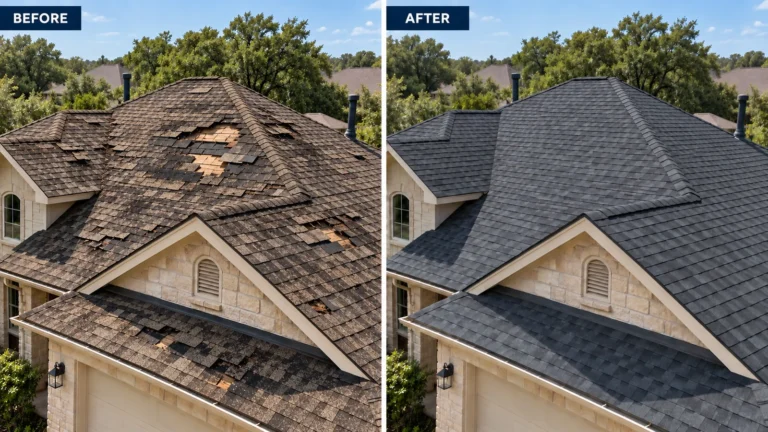
Look at the whole roof, not just the problem spot. A few wind-lifted shingles on the back slope, or one cracked pipe boot, is a repair. Hail bruises on every slope, heavy granule loss and shingles that crack when lifted point to replacement.
This is the test that matters most after a storm. On May 16, 2025, hail up to 3 inches fell across north and central Leander, with 2.75-inch stones measured in Deerbrooke and 2-inch hail in Carneros Ranch. Roofs hit that hard often show damage on more than one slope.
Test 3: What shape is the decking in?
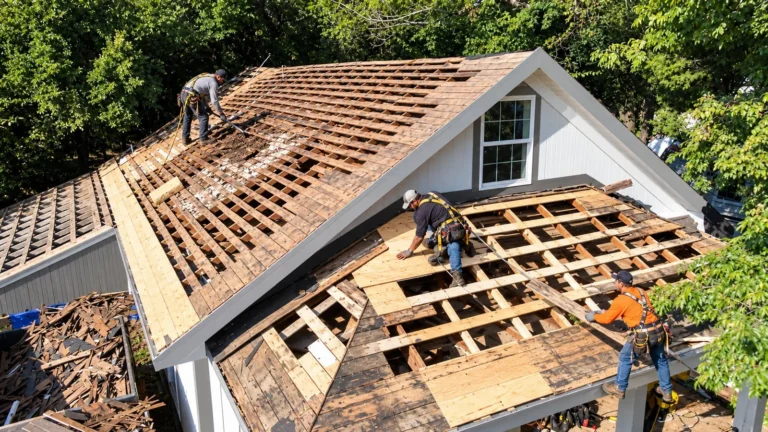
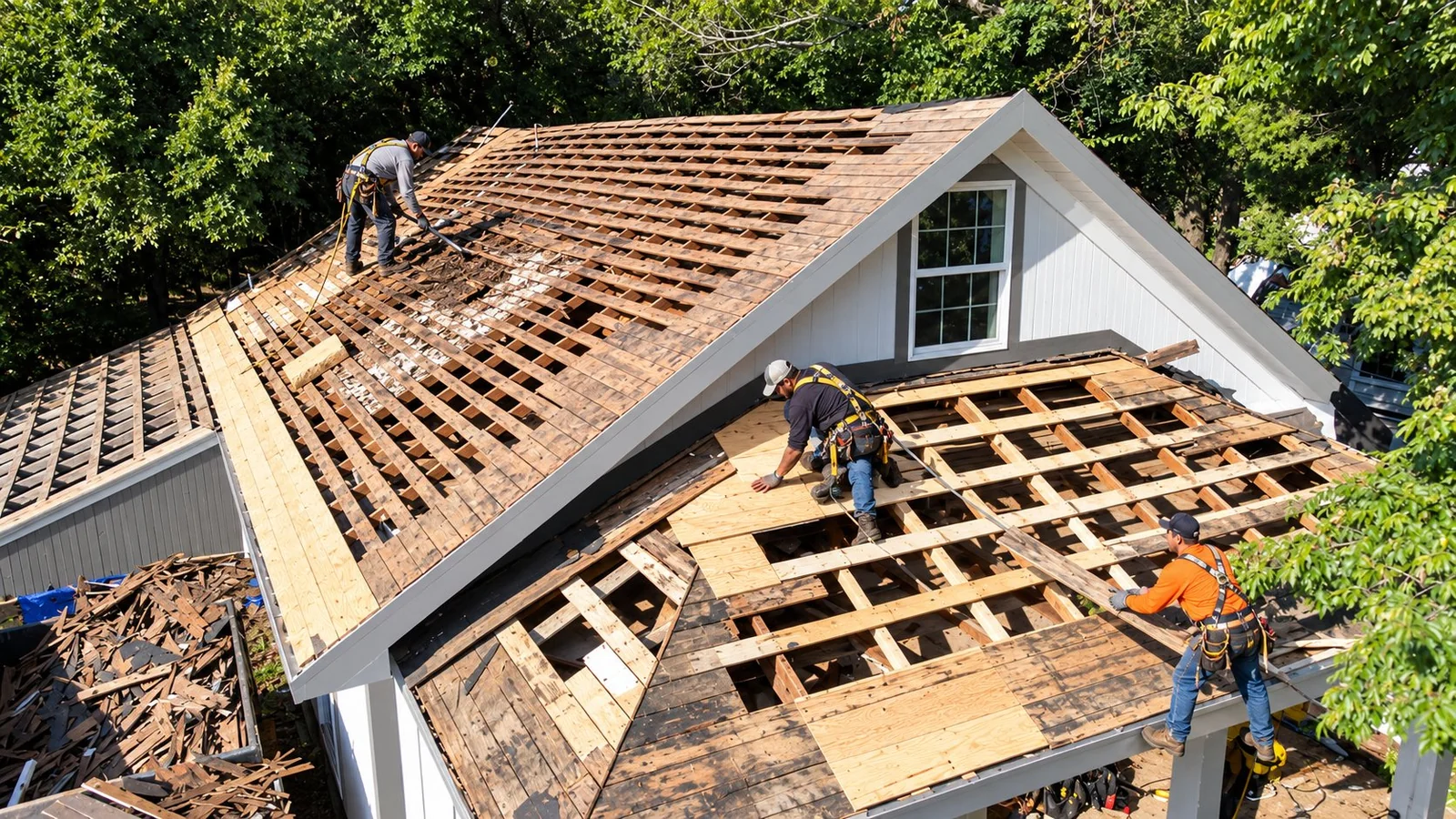
Decking is the plywood or OSB under the shingles. If it’s soft in one small area, a crew can cut it out and replace it during a repair. If soft spots show up across the roof, new shingles over old decking won’t hold, and that’s a replacement.
Check from the attic with a flashlight. Dark stains on the underside of the decking, rusty nail tips and damp insulation all show where water has been getting in.
Test 4: How many times has it leaked?
One leak with a clear source, like a pipe boot or a flashing gap, is a repair. Several leaks in different places over a year or two suggest the roof is wearing out, and that tips the repair or replace roof scale. Our roof leak repair page explains how a leak is traced to its real source.
Test 5: Can the shingles be matched?
Matching is the quiet deciding factor in many a repair or replace roof call. Shingle colors and styles get discontinued, and on a 10- or 15-year-old roof the exact shingle may no longer be made.
A close match on a back slope facing a greenbelt may look fine, while a patch of new color on the front of a house on Crystal Falls Pkwy may not.
The Texas Department of Insurance warns that your insurer might not pay to replace the entire roof, even if the new shingles don’t match the old ones perfectly. Check your policy, and check with your HOA. Most master-planned communities, including Crystal Falls, Bryson, Travisso and Mason Hills, require architectural approval for a change in shingle color or material.
Test 6: What will insurance cover?
If a storm caused the damage, insurance changes the repair or replace roof math. Many Texas policies carry a separate wind and hail deductible of 1% to 3% of the home’s insured value. When storm damage is limited to one area, the repair may cost less than that deductible, so a claim would pay nothing.
Roof Age, Insurance and the Repair or Replace Roof Math
Roof age affects how your insurer pays and sometimes what it covers at all. TDI says some policies pay the full cost of a new roof, while others pay less based on the roof’s age and condition. Some newer Texas policies also exclude cosmetic hail damage or pay only depreciated value on older roofs.
TDI suggests asking your agent whether the age and material of your roof are listed correctly. If you replace the roof, tell your insurer so it can update the age, since new roofs often get a better rate. Our Texas roof insurance claim guide covers deductibles, depreciation and the claim process step by step.
Two Texas laws matter here. A contractor can’t adjust or negotiate your claim (Insurance Code 4102.163), and can’t waive, absorb or rebate your deductible (Business and Commerce Code 27.02).
The claim belongs to you. We can provide dated photos and meet the adjuster on site if you ask.
Alternatives to Roof Replacement
When the repair or replace roof tests point to repair, these are the usual alternatives to roof replacement. Each one can add years to a roof that’s otherwise sound.
Targeted shingle repair
Replace damaged shingles, re-seat nail pops and fix lifted tabs in the affected area only. This works best on a younger roof with damage in one spot, like a section creased by wind or hit by a falling limb.
Re-flashing walls, chimneys and skylights
Many leaks start where the roof meets a wall or chimney. Removing caulk patches and installing real metal flashing, including kick-out flashing where a roof edge meets a wall, often stops the leak for good. Caulk where metal belongs is one of the builder-grade defects we see on newer Leander homes.
Pipe boots and vents
Rubber pipe boots crack after years of Texas sun and are a frequent leak source on 8- to 15-year-old roofs. Replacing them is a small job that removes one of the most common leak points.
Fastener work on metal roofs
Exposed-fastener metal roofs loosen from daily heat expansion, and the rubber washers wear out over 10 to 20 years. Replacing or resealing fasteners can stop leaks without new panels. See our metal roofing page.
Spot decking repair
If one leak softened a small area of decking, a repair can cut out and replace those sheets before new shingles go on. This only makes sense when the rest of the deck is firm.
When the Repair or Replace Roof Answer Is Replace
Replacement usually wins when the roof is near the end of its life and damage covers most slopes. It also makes sense when leaks keep coming back in new places, the decking is failing in several areas or the shingles can’t be matched. Signs that point to replacement:
- Granules washing out of gutters and downspouts in large amounts
- Shingles curling, cupping or cracking across the roof
- Bald spots where the asphalt mat shows through
- Sagging between rafters
- Daylight through the decking from the attic
- Hail damage on most slopes after a storm like May 16, 2025
If replacement is on the table, our roof replacement page covers what a full job includes, and our roof inspection in Leander page explains what a full roof and attic check looks at.
How to Get a Straight Repair or Replace Roof Answer
Here’s how we handle a repair or replace roof question for homes from Old Town Leander out to Palmera Ridge and Benbrook Ranch. We don’t knock on doors after storms, so this starts with you.
- Call and tell us about the problem.
- We inspect the roof and the attic and take dated photos of every problem we find.
- You get a written estimate before any work, even a tarp. If a repair makes sense, we say so.
- Repairs use metal flashing instead of caulk and fasteners placed to the manufacturer’s spec.
- We clean up with a magnet sweep for nails and give you before-and-after photos.
Repair or Replace Roof Questions
What is the 25% rule in roofing?
It comes from Section 706.1.1 of the Florida Building Code, Existing Building. It says no more than 25% of a roof or roof section can be repaired or replaced in 12 months without replacing the whole roof or section to current code. Texas has no statewide version.
Should I repair or replace roof shingles that are 15 years old?
It depends on condition, not just age. A 15-year-old roof with damage on one slope and solid decking is often worth repairing. If damage covers most slopes or leaks keep returning, get a replacement estimate before you pay for repairs.
Can you replace just part of a roof in Texas?
Yes. One slope or section can be replaced, as long as the work meets code and the shingle maker’s instructions. Matching the old shingles is the main challenge, so check with your HOA if you live in a master-planned community.
Does insurance pay to replace the whole roof or just repair it?
It depends on the damage and your policy. Insurers generally pay to restore what a covered storm damaged, which can mean a full roof when every slope is hit. TDI notes an insurer might not replace the whole roof just because new shingles don’t match perfectly.
What is the best alternative to roof replacement?
On a sound roof, targeted repair is the main alternative: replacing damaged shingles, re-flashing with metal, swapping cracked pipe boots or resealing metal roof fasteners. These only make sense when the decking is firm and the damage is limited.
Talk to a Leander Roofer
Call Leander Roof Repair at (512) 254-8474. We’ll look at the roof and attic and give you a written estimate for what your roof actually needs. Learn more about roof repair in Leander, or keep this repair or replace roof checklist handy for the next storm.