The Best Time of Year to Replace a Roof in Central Texas
The best time to replace a roof in Leander is usually fall or a mild stretch of late winter, after hail season and outside the hottest weeks of summer. Crews can work full days, shingles handle well, and you have time for HOA approval and the City check. The exception is storm damage: that should never wait for a better season.
Central Texas doesn’t have a true off-season for roofing, but each season brings its own tradeoffs. This guide walks through Leander’s roofing year, what shingle makers say about installing in heat and cold, and how to plan around HOA review, permits and storm demand.
Leander’s Roofing Year at a Glance
Here’s how the seasons usually play out for roof replacement season in Texas, specifically around Leander and ZIP 78641.
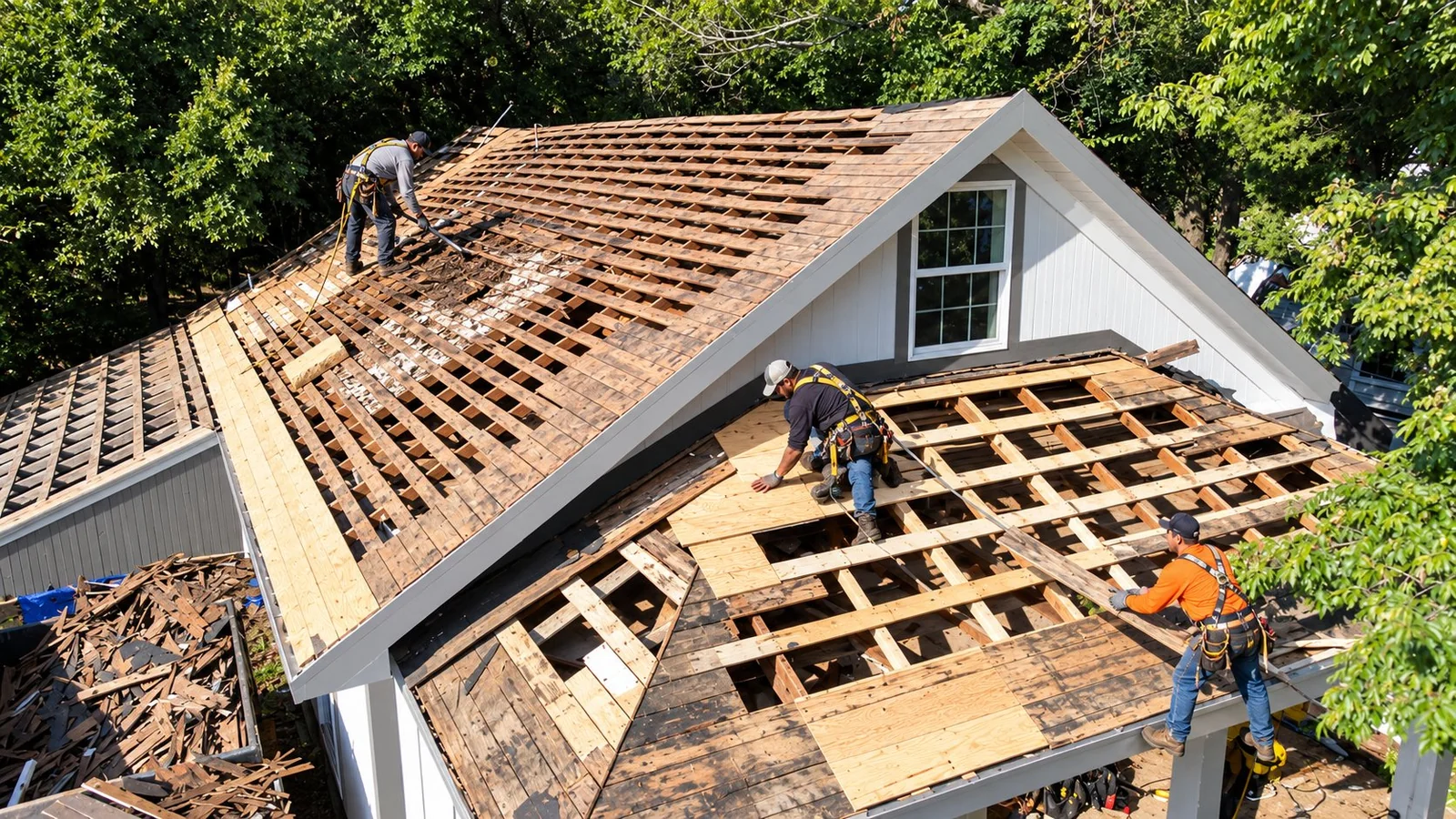
| Season | Weather | What it means for a re-roof |
|---|---|---|
| Spring (March to June) | Main hail season | Schedules fill after storms; plan around possible delays |
| Summer (July to August) | Long run of 90°F+ days | Work shifts to early hours; shingles need careful handling |
| Fall (September to November) | Smaller hail run in September and October, then milder | Often the best time to replace a roof for planned jobs |
| Winter (December to February) | Variable, with occasional freezes and ice | Workable on mild days; cold snaps can delay sealing |
The pattern comes from local storm records. StormerSite has logged 105 hail reports within 10 miles of Leander since 2004, and 73 of them came in April or May. Hail season here runs mainly March through June, with a smaller run in September and October.
Why Fall Is Often the Best Time to Replace a Roof
For a planned replacement, fall checks the most boxes. The worst of the heat has passed, the main hail season is over and the holidays haven’t started yet.
Comfortable installing temperatures
GAF’s technical bulletin on temperature extremes and asphalt shingles says that for easiest handling, temperatures should be below 90°F in hot weather and above 40°F in cold weather. GAF also says there’s no practical lower or upper temperature limit, so these are handling guidelines rather than hard cutoffs.
Enough sun to seal the shingles
Shingles have a strip of adhesive that bonds each course to the one below once the sun warms it. GAF says sealing time varies with the roof’s slope, its orientation and how much sun and heat the shingles get. Fall sun usually does the job without the handling problems of peak summer.
Time to finish before the next hail season
A roof replaced in the fall is in place, sealed and photographed before the March to June hail season. That’s why fall is often the best time to replace a roof near the end of its life: the new shingles get time in the sun to seal before spring storms arrive.
Is Summer a Bad Time to Replace a Roof?
Summer isn’t the best time to replace a roof, but done right it’s fine. The area averages about 93 days a year above 90°F, so crews plan around the heat.
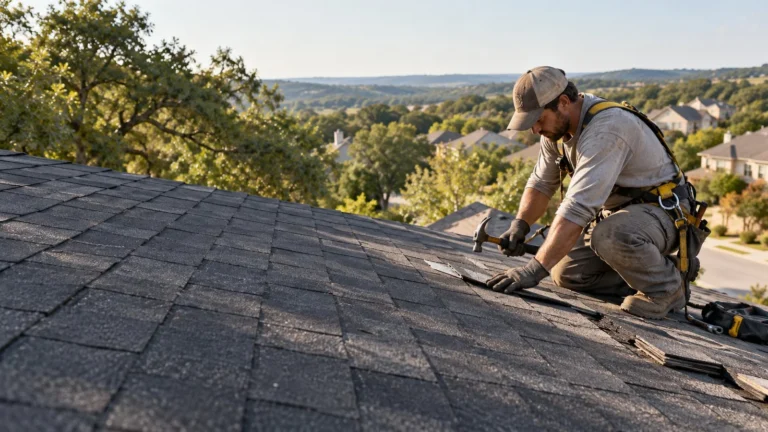
GAF lists what hot weather does to shingles: they’re more easily damaged by foot traffic, can stick together in the wrapper or on the roof, and can tear or crack if mishandled. GAF recommends soft-soled shoes and storing bundles in shade when possible. Malarkey’s hot-weather bulletin suggests starting on south-facing slopes in the morning and working around to the west and north sides as the roof heats up.
What that means for you: expect early starts, and ask how the crew handles midday heat. On a steep two-story roof in Bryson or Travisso, that planning matters more.
Winter: The Best Time to Replace a Roof on Mild Days
If fall is booked, a mild winter week can be the best time to replace a roof. Winter re-roofs work on mild days. The concern is cold snaps, like Winter Storm Uri in February 2021, when ice and snow sat on roofs for days.
In cold weather, GAF says shingles can become brittle and crack or break when bent, and may curl instead of lying flat. GAF also says hand sealing may be needed when it’s too cold to activate the adhesive promptly. IKO’s cold-weather bulletin notes that sealing may take up to several weeks in those conditions.
A good crew watches the forecast and skips days that are too cold to work properly. If your roof goes on in winter, ask whether hand sealing is planned for cold days.
Spring: Hail Season and Storm Demand
Spring is the hardest season to plan a re-roof around. Big hail days, like May 16, 2025, when hail up to 3 inches fell in north and central Leander, can damage roofs across whole neighborhoods at once.
After a storm like that, roofers’ schedules fill quickly. The Leander Neighbors Facebook group regularly has posts warning about door-to-door roof solicitors after storms. We don’t knock on doors, and you shouldn’t feel rushed into signing anything on your porch.
If you’re planning a non-storm replacement, spring is rarely the best time to replace a roof. Your job may get pushed for urgent storm work, and a storm could hit the old roof while you wait.
When to Replace a Roof Regardless of Season
The best time to replace a roof is any season when the old one has failed. Don’t wait for fall if:
- Hail or wind damaged most slopes and your insurer has approved replacement.
- Leaks keep coming back in new places.
- Decking is soft or sagging.
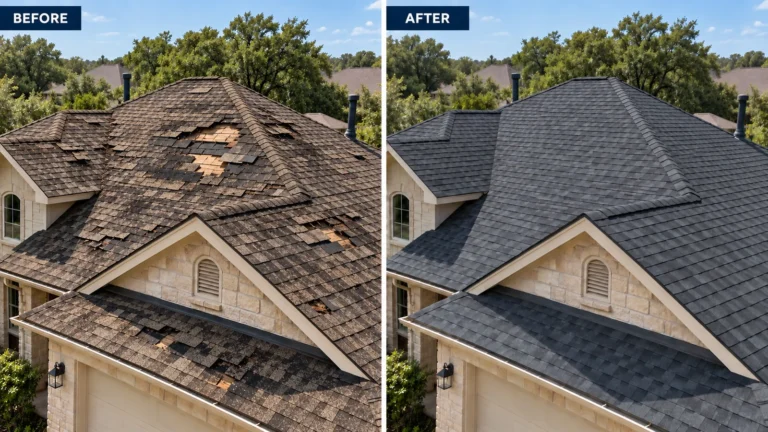
- Shingles are cracking, curling or bald across the roof.
Storm damage should be documented and reported promptly. Check your policy for any deadline to report damage, and see our hail damage roof repair page for how we document it with dated photos. Texas law bars a contractor from adjusting your claim (Insurance Code 4102.163) or waiving your deductible (Business and Commerce Code 27.02), as the Texas Department of Insurance explains.
Plan the Lead Time: HOA Approval and Permits
Choosing the best time to replace a roof also means working backward from paperwork, so start well before the season you want. Two approvals can take time before a crew ever shows up.
HOA approval
Most master-planned communities in Leander, including Crystal Falls, Bryson, Travisso and Mason Hills, require HOA architectural approval for a change in shingle color or material. Like-for-like work often doesn’t, but check your HOA rules. Our guide to HOA roof approval in Leander covers what to submit.
City permit
The City of Leander lists re-roofing among exterior work that doesn’t need a building permit, but it asks owners to confirm with its Permits & Building Inspections Department before work starts. We check with the City before any re-roof. See our post on the Leander roof permit for how it works.
Best Time to Replace a Roof When Buying or Selling
A home sale can set the calendar for you. If you’re buying, the inspection period is the best time to learn the roof’s age and condition. Our post on roof inspections when buying a home in Texas covers what to ask.
If you’re selling, a roof near the end of its life is likely to come up in the buyer’s inspection. Replacing it before listing removes that question, but leave room for HOA review and the permit. Either way, tell your insurer when a roof is replaced so the policy shows the new age.
Picking Materials and Color Before You Book
The best time to replace a roof is also the best time to rethink what goes on it. A re-roof is when you can switch to impact-resistant shingles, change colors or fix attic ventilation.
Color choices affect attic heat and HOA approval, so decide early. Our post on roof color, heat and home value walks through it.
How to Plan a Re-Roof Step by Step
Here’s a simple order of operations, whether you live off Crystal Falls Pkwy, near Devine Lake Park or out by Hero Way:
- Get the roof and attic inspected, with dated photos of every problem.
- Get a written estimate that names the shingle line and color.
- Pick your color and submit to your HOA if you have one.
- Book a start window, ideally in fall or a mild winter stretch for planned work.
- Confirm with the City of Leander before work begins.
- Watch the forecast together and reschedule if heat, cold or rain makes a day a bad fit.
- After install, get photos and keep them with your warranty and permit records.
For what a full job includes, see our roof replacement page.
Best Time to Replace a Roof FAQs
What is the best time to replace a roof in Texas?
For planned work in Central Texas, fall is usually the best time to replace a roof. Temperatures are milder, the main spring hail season is over and you have time for HOA approvals and the City check. Storm damage should be handled whenever it happens.
Can you replace a roof in the summer in Texas?
Yes. Crews start early and handle shingles carefully, since GAF says hot shingles are more easily damaged by foot traffic. GAF’s guidance for easiest handling is below 90°F, which in a Leander summer often means mornings.
Can a roof be replaced in winter?
Yes, on workable days. GAF says cold shingles can become brittle and may need hand sealing if it’s too cold for the adhesive to activate promptly. A good crew skips days that are too cold to work properly.
Should I replace my roof before or after hail season?
If the roof is near the end of its life, replacing it in the fall before the March to June hail season is a sound plan. If it’s still in decent shape, some homeowners wait until after spring storms, since a hailstorm could damage a new roof just as easily.
How long does a roof replacement take?
The time on the roof depends on its size, pitch and the weather. The bigger variable is lead time: inspection, estimate, HOA review if you have one and the check with the City. Ask for a start window in writing.
Talk to a Leander Roofer
Thinking about a re-roof in the next few months? Call Leander Roof Repair at (512) 254-8474. We’ll inspect the roof, give you a written estimate and help you pick a start window that fits the season.