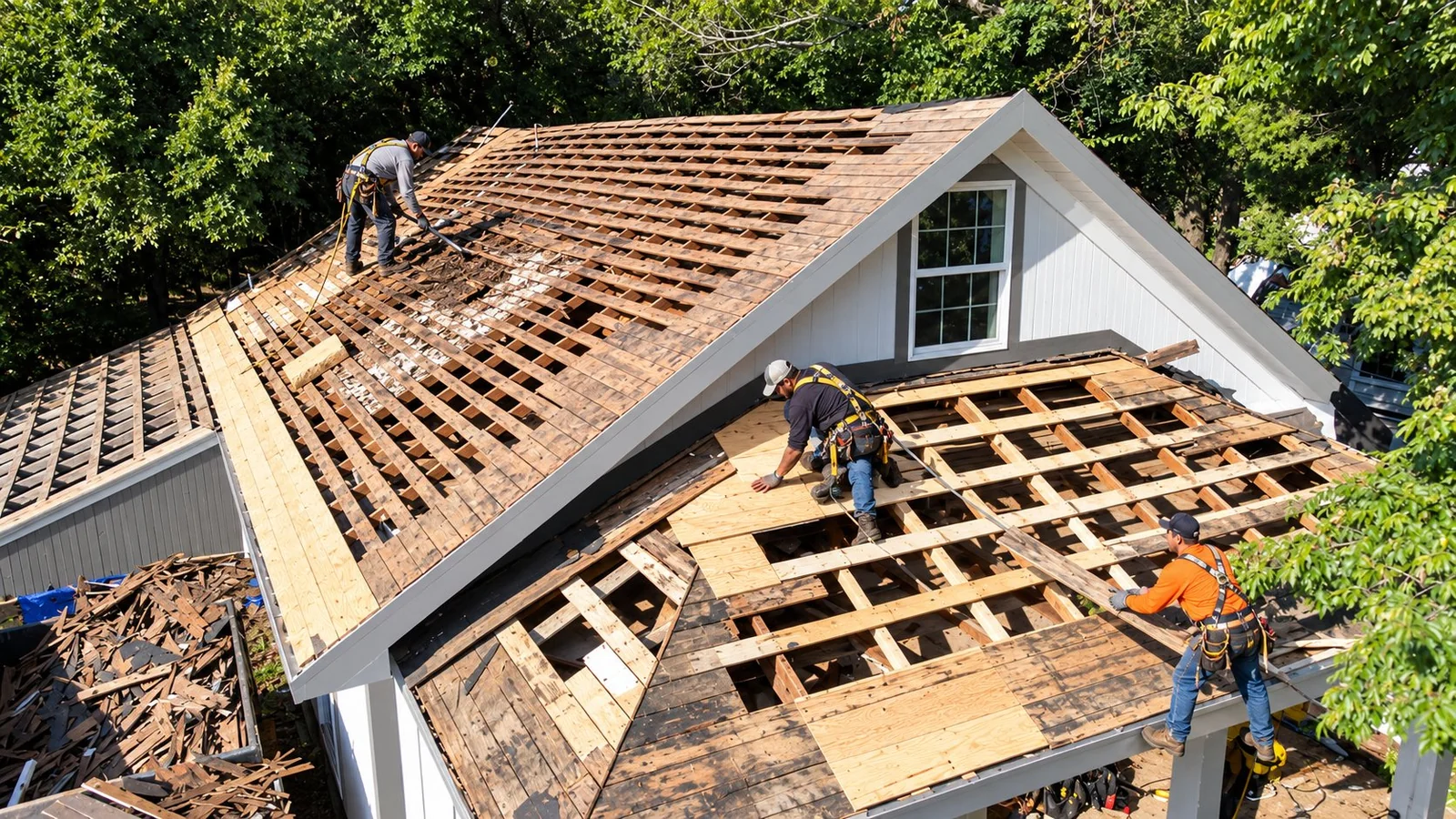
Commercial roofing · Leander, TX 78641
Commercial Roofing in Leander, TX
Commercial roofing Leander businesses depend on is mostly flat and low-slope roofs: TPO, modified bitumen, EPDM, metal and coated roofs on retail centers, offices, churches, warehouses and apartments. We inspect, document and repair them, put every finding in a dated photo report, and schedule work around your tenants and business hours.
Updated October 2026 · Leander Roof Repair, Leander, TX
What Commercial Roofing Leander Owners Need
Commercial roofing covers the inspection, repair, maintenance and replacement of roofs on business and multi-tenant buildings. Most of these are low-slope roofs covered with a membrane, such as TPO, modified bitumen or EPDM, or with metal panels.
The work goes beyond the membrane. Flashing at walls and parapets, drains, scuppers, HVAC curbs and pipe penetrations are where most commercial leaks start. A good roof plan covers all of them.
We work with owners, property managers and facility staff. The goal is simple: find problems early, write them down with dated photos, and fix them without shutting down the people inside.
Commercial Roofing Leander Buildings Use: 5 Common Systems
Commercial roofing Leander buildings carry falls into five main groups. Each has its own weak points and its own repair materials.
| Roof type | What it is | Common problems |
|---|---|---|
| TPO | White or light single-ply membrane with heat-welded seams | Seam failures, punctures, flashing pulling away at walls and curbs |
| Modified bitumen | Asphalt-based rolls laid in layers, torched or adhered | Blisters, cracked cap sheet, open laps, granule loss |
| EPDM | Black rubber single-ply membrane | Shrinkage, seam tape failure, punctures |
| Metal | Standing seam or exposed-fastener panels | Loose or backed-out fasteners, rust at laps, sealant failure |
| Coatings | Liquid coating over a sound existing roof | Peeling, thin spots, wear where water ponds |
TPO and other single-ply membranes
TPO is common on newer retail and office buildings. It’s light-colored and reflective, and its seams are welded with hot air. Its weak points are seams, corners and the flashing around rooftop units and walls.
Modified bitumen
Modified bitumen roofs are built in layers and stand up well to foot traffic. With age, the cap sheet cracks and laps open. Blisters show where moisture or air got trapped during installation.
EPDM
EPDM is a rubber membrane found on older buildings and additions. Seams and flashings need regular checks. Older EPDM can shrink and pull at the edges and corners.
Metal roofs
Metal shows up on churches, shops, warehouses and smaller commercial buildings west of US-183 and out toward Bagdad Road. Exposed-fastener panels loosen from daily heat expansion, and the washers under the screws degrade over 10 to 20 years. Our metal roofing page covers metal in detail.
Roof coatings
A coating can extend the life of a roof that is still sound underneath. It does not fix wet insulation, open seams or a failed deck.
The U.S. Department of Energy suggests a cool roof coating on an existing roof only “if the type of roof is suitable for coating” (DOE on cool roofs).
Why Heat Matters for Commercial Roofing Leander, TX Buildings
Leander averages about 93 days a year above 90°F. A flat roof takes that sun all day with no shade and no slope to shed heat. Heat speeds up wear on membranes, seams, sealants and pitch pockets.
DOE says a cool roof is designed to reflect more sunlight than a conventional roof, and that lower roof temperature “may extend roof service life.” That’s one reason white TPO and reflective coatings are popular on commercial roofing Leander owners put up or redo.
A reflective surface doesn’t stop hail. It does ease heat stress on the roof and on the HVAC units working below it.
Commercial Roofing Leander Corridors: US-183, 183A and Northline
Most commercial roofing Leander has sits along the main roads. Strip centers and offices line US-183 and the 183A Toll. Buildings cluster near Leander Station on the Capital MetroRail Red Line, and new projects are going up in the Northline district.
Churches, medical offices and apartment buildings fill in along Hero Way, Crystal Falls Parkway, Ronald Reagan Boulevard and San Gabriel Parkway. Each building type needs a slightly different commercial roofing Leander plan.
| Building type | What we plan around |
|---|---|
| Retail centers | Store hours, customer entrances and parking |
| Offices and medical buildings | Quiet hours, patient areas, early or weekend work |
| Churches | Services and events, large open rooms below |
| Warehouses | Dock traffic, stored goods under roof openings |
| Apartment buildings | Resident notice, safe walkways, parking lots |
Commercial Roof Repair in Leander: Where Leaks Start
Most leaks on a flat or low-slope roof start at a joint, an edge or a penetration. They rarely start in the open field of the membrane. Water sits longer on a low-slope roof, so a small opening matters more than it would on a pitched shingle roof.
The usual suspects:
- Seams that were never fully welded or have pulled apart.
- Parapet and wall flashing that has pulled loose, or a cracked coping cap.
- HVAC curbs where the flashing has split.
- Drains and scuppers clogged with leaves, grit or loose debris.
- Punctures along the path from the roof hatch to rooftop units, often from dropped screws.
For a flat roof repair, the patch has to match the membrane. A TPO patch won’t bond to EPDM, and some asphalt products damage single-ply sheets. If water is coming in right now, see emergency roof repair.
How Often Should Commercial Roofing in Leander Be Inspected?
For commercial roofing Leander storms and heat wear down, twice a year is a sensible baseline, usually spring and fall. Add an inspection after any storm with hail 1 inch or larger or high wind. Regular checks catch open seams, clogged drains and loose flashing before they become wet insulation and stained ceiling tiles.
What a commercial roof inspection covers
- Membrane or panels: seams, punctures, blisters, shrinkage and fasteners.
- Flashing: walls, parapets, curbs and pipe penetrations.
- Drainage: drains, scuppers, gutters and spots where water stands after rain.
- Rooftop equipment: HVAC curbs, condensate lines and service-traffic damage.
- Inside: ceiling stains, wet insulation and deck condition where we can reach it.
Our roof inspection in Leander page explains how our dated photo reports work.
Scheduled Maintenance for Commercial Roofing Leander Properties
Scheduled maintenance puts the roof on a calendar instead of waiting for a tenant complaint. It also builds a dated record of the roof’s condition, which helps with budgets, sales and insurance.
A typical visit includes:
- Clearing drains, scuppers and gutters.
- Checking and resealing minor seam and flashing problems before they leak.
- Walking the service paths for punctures.
- A post-storm check when hail or high wind hits the area.
- A dated photo report you can forward to an owner, asset manager or board.
We set the scope of commercial roofing Leander maintenance around your roof type and how the building is used. Any repair we find comes with a written estimate, and nothing gets done until you approve it.
Storm Documentation for Owners and Property Managers
The National Weather Service counts a thunderstorm as severe when it brings hail 1 inch or larger or winds of 58 mph or more (NWS severe weather criteria). Leander gets those storms most springs. On May 16, 2025, hail up to 3 inches fell in north and central Leander.
Hail on commercial roofing Leander owners manage is harder to spot than on shingles. We look for bruised or cracked membrane, crushed insulation underfoot, dented metal coping and vents, and damaged rooftop units. Every finding gets a dated photo, marked by location on the roof.
The claim belongs to the owner.
Under Texas Insurance Code 4102.163, a contractor can’t adjust or negotiate a claim, and Business and Commerce Code 27.02 bars a contractor from waiving or paying a deductible (TDI: know the law). We supply photos and a written estimate, and we can meet your adjuster on site if you ask. See storm damage roof repair and our guide to Texas roof insurance claims.
Working Around Tenants
Most commercial roofing Leander crews do happens over occupied space. We plan around the people inside.
- Notice: We agree on dates and times with the manager so tenants can be told.
- Access: Ladders, lifts and materials stay away from customer entrances.
- Noise and odor: Loud work and adhesives are scheduled with timing and air intakes in mind.
- Open roof: We open only what we can close the same day.
- Cleanup: A magnet sweep for nails and screws in parking lots and walkways.
Repair, Coat or Replace Commercial Roofing in Leander?
Every commercial roofing Leander decision comes down to what’s under the membrane.
Repair is usually right when damage is limited and the insulation underneath is dry. A coating may fit a roof that is sound and dry but weathered on the surface. Replacement makes sense when wet insulation is widespread, seams fail across the roof, or it has been patched over and over.
We show you the findings with photos before recommending any of the three. Our repair or replace guide covers the same decision for homes. Permits are pulled when the City of Leander requires them.
Commercial Roofing Leander FAQs
What type of commercial roof works best in Leander?
It depends on the building, the slope and how the roof is used. Light-colored membranes like TPO handle heat well on flat roofs, and metal suits many smaller buildings and churches. We explain the trade-offs for your building in writing.
Can you work on our roof without shutting down the business?
Usually, yes. Most commercial roofing Leander work happens on the roof, not inside tenant spaces. We schedule noisy or disruptive work around business hours when we can.
How do I know if hail damaged our flat roof?
It’s hard to tell from the ground. Dented metal coping, damaged rooftop units and new leaks after a storm are clues. An inspection with dated photos is the reliable way to know.
Do you work with property managers and insurance adjusters?
Yes. We send reports to whoever you name and can meet the adjuster on site if you ask. The claim stays between the owner and the insurer, as Texas law requires.
How often should a commercial roof be checked?
Twice a year, usually spring and fall, plus after any storm with hail 1 inch or larger or high wind. Drains and seams are the first things to check. Small problems found early stay small.
Need a Commercial Roof Checked?
Call Leander Roof Repair at (512) 254-8474 with your building address and what you’re seeing. We handle commercial roofing Leander, TX owners and managers can plan around. We’ll inspect the roof, document it with dated photos and give you a written estimate.