Class 4 Impact-Resistant Shingles in Texas: Are They Worth It?
Class 4 shingles are worth pricing for most Leander homeowners who are already replacing a roof. They carry the top UL 2218 impact rating and may earn an insurance credit, but they are not hail-proof, brands perform differently, and the credit depends entirely on your insurer. Ask your agent before you choose.
Hail is why this question comes up so often here. Texas has led the US in major hail events for 11 straight years, according to the NICB, and Leander sits in the middle of it. This guide covers how the rating works, what Texas insurers may credit, how to verify the label and when Class 4 shingles make sense on a Leander roof.
What Are Class 4 Shingles?
Class 4 shingles are roof coverings that passed the highest level of the UL 2218 impact test. In that test, steel balls are dropped onto the shingle from a height meant to match the energy of a hailstone of the same size. A Class 4 product takes hits from a 2-inch steel ball without cracking through.
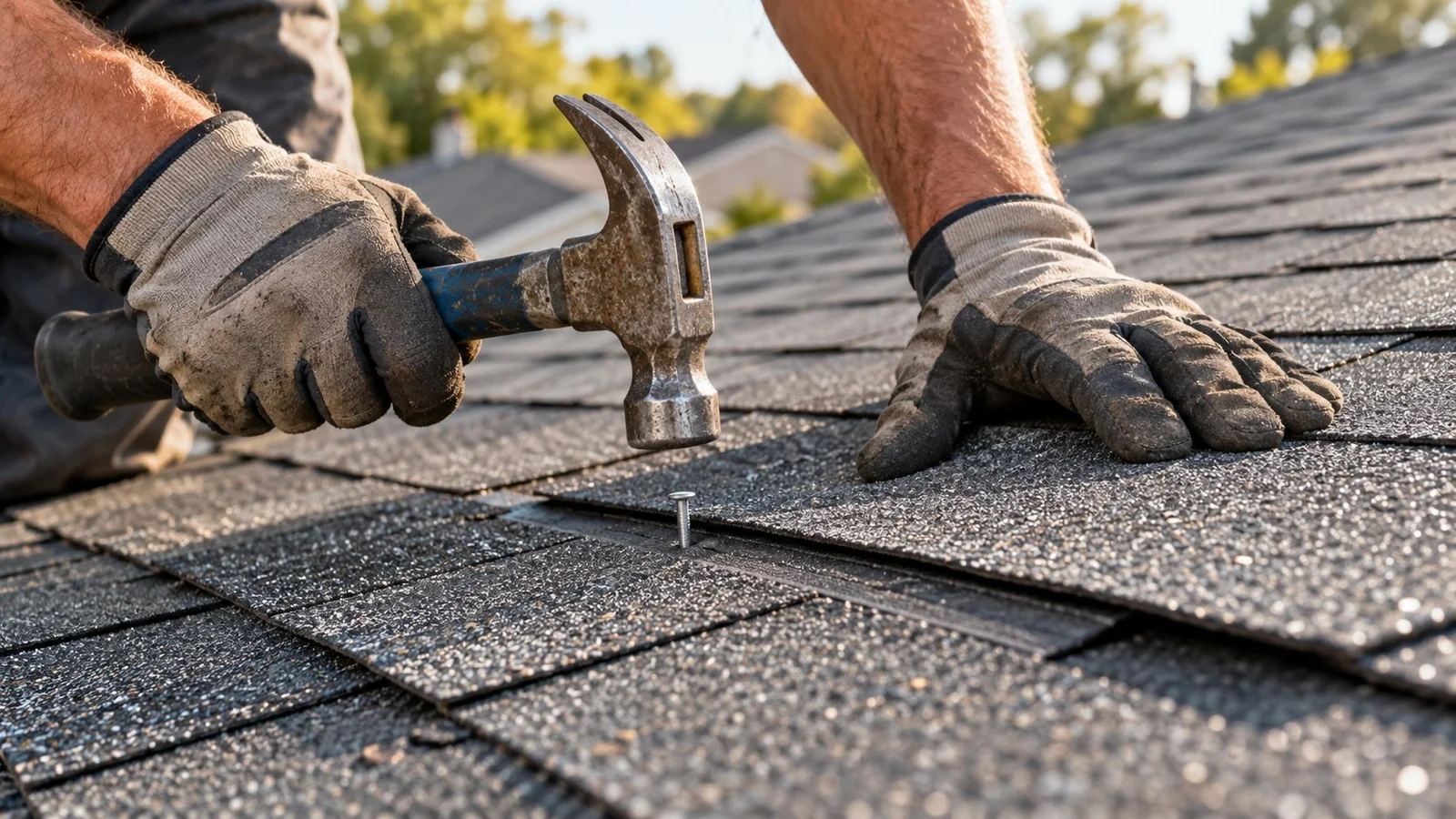
Each manufacturer reaches that rating with its own design, so two Class 4 products can perform differently. From the street, most Class 4 shingles look like any other architectural shingle. Your neighbors in Bryson or Travisso probably can’t tell the difference.
UL 2218 Class 1 to 4 compared
An IBHS research paper describes the UL 2218 test. Each spot on the sample takes two strikes from the steel ball, and a pass means no opening, tear or crack visible on the back of the shingle.
| UL 2218 rating | Steel ball diameter | What it means |
|---|---|---|
| Class 1 | 1.25 in | Lowest impact rating |
| Class 2 | 1.50 in | Passed a larger ball |
| Class 3 | 1.75 in | Passed a golf-ball-size ball |
| Class 4 | 2.00 in | Highest rating |
The same paper notes that standardized tests “do not exactly replicate natural hailstone impacts.” Real hail varies in size, hardness and angle. On May 16, 2025, hail up to 3 inches fell in north and central Leander, larger than anything the UL 2218 test uses.
Do Class 4 Shingles Lower Insurance in Texas?
Sometimes, but nothing is automatic. The Texas Department of Insurance says roofing that passes impact testing “may be eligible” for discounts. It also says the discount amount for each class “is established by the insurance company on a company-by-company basis.”
Here is what TDI’s roofing discount page says about a class 4 roof insurance discount Texas homeowners ask about:
- Roofing rated Class 1, 2, 3 or 4 may qualify for a discount.
- “A Class 4 roof covering would receive the highest premium credit.”
- Each insurer decides which test criteria it accepts and what paperwork it needs.
- After installation, the contractor fills out TDI form PC068, the Impact-Resistant Roofing Installation Form.
- Insurers may use PC068 or require their own form.
- TWIA offers credits, and PC068 is required for a TWIA credit.
Call your agent before you pick a shingle. Ask whether a credit applies, how much it is, and what proof they need, and get the answer in writing.
Class 4 shingles and cosmetic damage endorsements
Some newer Texas policies exclude cosmetic hail damage, meaning dents or marks that don’t let water in. Read your declarations page and endorsements, or ask your agent, before you assume what your policy pays.
A cosmetic exclusion changes the math. If hail scuffs Class 4 shingles but doesn’t break them, a claim may pay nothing for those marks. Our Texas roof insurance claims guide explains how roof claims work here.
How Class 4 Shingles Hold Up in Real Hail
No shingle is hail-proof, and the Class 4 label does not tell the whole story. The Insurance Institute for Business and Home Safety (IBHS) buys shingles at retail and tests them with laboratory-made hailstones instead of steel balls.
In its November 2025 ratings, IBHS rated a record 24 impact-resistant shingle products. Most earned “Good,” and none earned “Excellent.” IBHS’s chief engineer put it plainly: “not every product delivers on that promise.”
IBHS also says that if a product rates Marginal or Poor, it does not recommend using it in areas that experience hail. That describes Leander. Ask any roofer which IBHS rating their proposed shingle earned.
Class 4 shingles vs. standard architectural shingles
| Question | Standard architectural | Class 4 shingles |
|---|---|---|
| UL 2218 rating | Usually none or lower | Class 4 |
| Up-front price | Lower | Usually higher |
| Insurance credit | Usually none | Possible, insurer by insurer |
| Look from the street | Dimensional | Usually the same |
| Hail-proof? | No | No |
| Paperwork to keep | Warranty | Warranty, PC068 or insurer form, label |
For what hail damage looks like on any shingle, see our guide to signs of hail damage.
How to Verify Impact Resistant Shingles in Texas
The rating only helps you if you can prove it. For a TWIA credit, TDI says the product must be labeled with:
- The UL label, or one from another lab approved by TDI
- The UL 2218 impact class (Class 1, 2, 3 or 4)
- The manufacturer’s name
- The year manufactured
- The brand name of the product
Private insurers set their own proof rules, but the same records help. Keep a bundle wrapper, the manufacturer’s spec sheet showing the UL 2218 rating, the signed PC068 or insurer form, and dated photos of the shingles going on. You may need them when you switch insurers or sell the house.
The accessories matter too. Ask whether the ridge caps and starter strips are part of the impact-rated system, and get the full product list in your written estimate.
Do Leander HOAs Allow Class 4 Shingles?
Most master-planned communities in Leander, including Crystal Falls, Bryson, Travisso and Mason Hills, require architectural approval for changes in shingle color or material. Submit the product name, color and spec sheet before anything is ordered. Like-for-like repairs often don’t need approval, but check your HOA rules.
Texas law helps. Texas Property Code 202.011 bars an HOA from prohibiting shingles designed primarily to be wind and hail resistant, if the owner is otherwise allowed to install shingles. When installed, the shingles must resemble those used or allowed in the subdivision, be more durable than and of equal or superior quality to them, and match the look of surrounding homes.
The HOA can still review color and appearance. Pick a color close to what is on nearby homes and ask for the committee’s decision in writing.
Are Class 4 Shingles Worth It in Leander?
The case for Class 4 shingles is strongest when several of these are true:
- Your insurer offers a credit, confirmed in writing.
- You plan to stay several years, so a yearly credit adds up.
- Your street has a hail record. Leander has 105 hail reports within 10 miles since 2004, per StormerSite, with 73 in April or May.
- Your roof is due anyway. Architectural shingles often last about 15 to 25 years in Central Texas.
- The product rates well with IBHS, not just on the UL label.
The case is weaker if you are selling soon, your insurer offers no credit, or the only Class 4 option your HOA allows rates poorly with IBHS. Your wind and hail deductible matters too. Many Texas policies set it at 1% to 3% of the dwelling value, so a tougher roof may help you avoid smaller losses you would pay yourself.
If you’re comparing options, see our roof replacement page. If you’re weighing metal roofing instead, ask for its UL 2218 rating in writing too.
How We Handle a Class 4 Shingles Job
The rating only helps if the roof is installed to the manufacturer’s instructions. Our process is the same on every job in Leander, from Deerbrooke to Old Town:
- Call us photos of your roof.
- We inspect the roof and attic and take dated photos of every problem.
- You get a written estimate listing the exact product, with no same-day deadline.
- If your city requires it, we pull the permit; the City of Leander lists re-roofing among exterior work that doesn’t need a building permit, but we still confirm with its Permits & Building Inspections Department before any re-roof.
- We install to the manufacturer’s spec, with metal flashing instead of caulk.
- We clean up with a magnet sweep and fill out PC068 or your insurer’s form.
We don’t knock doors after hail, and we can’t negotiate your claim or touch your deductible. Texas law bars both.
Class 4 Shingles Questions
Do Class 4 shingles stop hail damage?
No shingle stops all damage. Class 4 shingles passed the toughest UL 2218 steel-ball test, but very large or wind-driven hail can still crack or bruise them. IBHS testing with lab-made hailstones shows performance varies by product, so check the IBHS rating too.
How much is the class 4 roof insurance discount in Texas?
It depends on your insurer. TDI says each company sets its own discount amount, test criteria and paperwork. Ask your agent for the exact credit, in writing, before you buy.
What is TDI form PC068?
PC068 is the Texas Department of Insurance’s Impact-Resistant Roofing Installation Form. The contractor fills it out after installation to document what was installed. TWIA requires it for a credit, and private insurers may use it or their own form.
Do Class 4 shingles look different from regular shingles?
Usually not. Most Class 4 shingles come in the same architectural style and colors as standard lines. HOA committees often can’t tell them apart from the street, though they still review color.
Can my HOA stop me from installing Class 4 shingles?
Texas Property Code 202.011 limits that. An HOA can’t prohibit wind and hail resistant shingles if they resemble approved shingles, are more durable and of equal or better quality, and match the neighborhood’s look. Apply for approval first.
Talk to a Leander Roofer About Class 4 Shingles
Call us about your current roof, and we’ll inspect it and give you a written estimate with the exact products listed. Call Leander Roof Repair at (512) 254-8474. Learn more about roof repair in Leander.