Multifamily and HOA roofing · Leander, TX 78641
Multifamily Roofing in Leander, TX
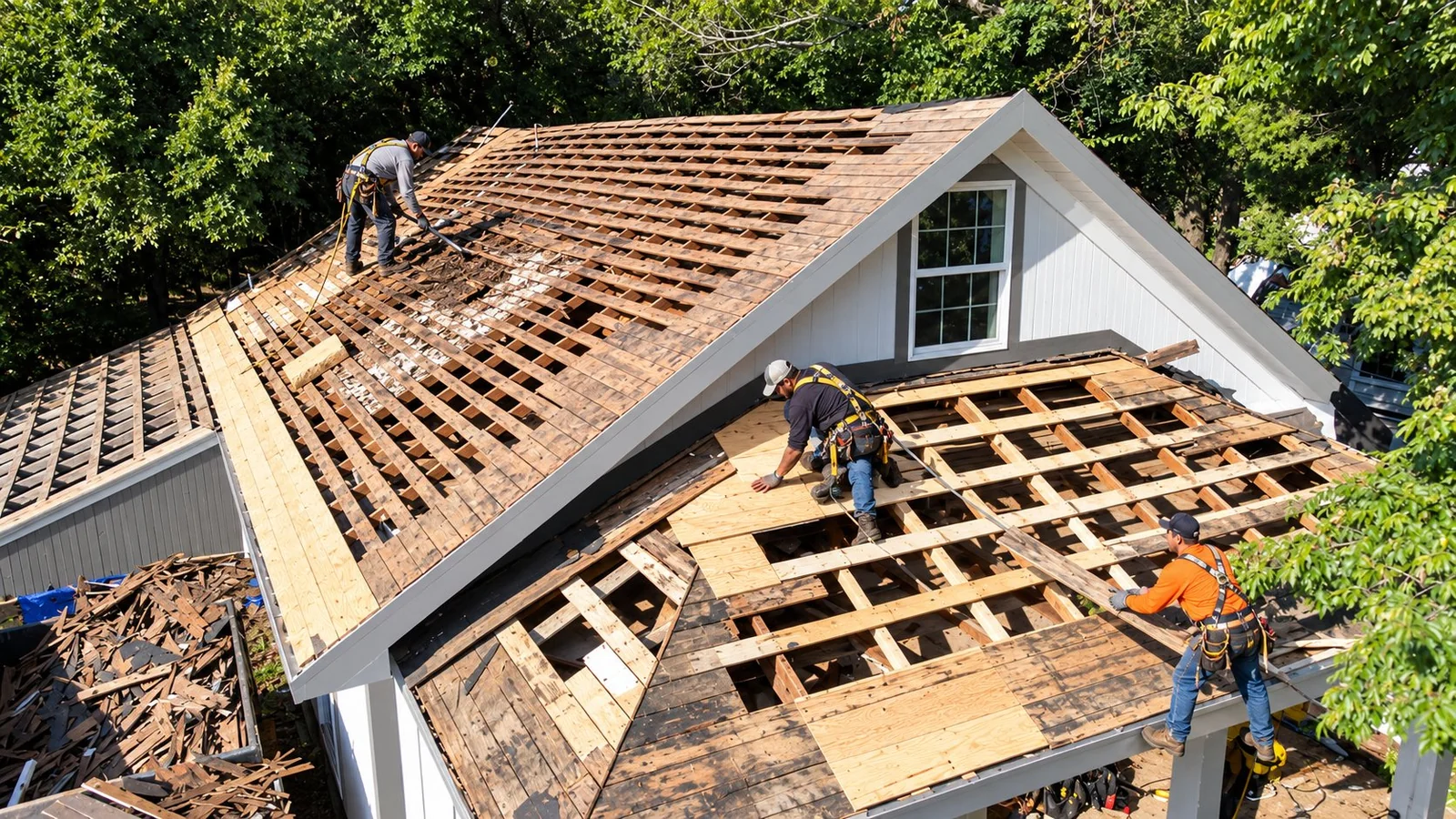
Multifamily roofing Leander properties need covers apartment complexes, townhome and condo communities, and HOA-managed buildings. We inspect every building, put each finding in a dated photo report by building and slope, give a written estimate before any work, and schedule repairs around residents, parking and access so people can keep living their lives.
Updated October 2026 · Leander Roof Repair, Leander, TX
What Multifamily Roofing Leander Properties Need
A multifamily property is many roofs that have to be managed as one. An apartment complex off US-183 or a townhome community near Ronald Reagan Blvd may have a dozen buildings or more, plus a clubhouse, a leasing office, carports and a pool building. Each one ages, leaks and takes hail a little differently.
Multifamily roofing Leander owners and boards deal with is less about one big repair and more about keeping track. Which buildings are older, and which leak came back after the last patch?
We handle multifamily roofing Leander properties need anywhere in ZIP 78641, on both the Williamson County and Travis County sides of town. That runs from US-183 and the 183A Toll to Hero Way, San Gabriel Pkwy, Lakeline Blvd and the area around Leander Station and the Northline district.
We work with property owners, on-site managers, management companies and HOA boards. The goal is the same as on our commercial roofing work: find problems early, document them with dated photos and fix them without disrupting the people inside.
Roof Types on Leander Apartments, Townhomes and Condos
Most buildings that need multifamily roofing Leander work mix two kinds of roof. Pitched shingle roofs cover the living units, and low-slope roofs show up on bigger buildings, amenity centers and additions.
| Building | Typical roof | Where problems start |
|---|---|---|
| Garden-style apartments (2 to 3 stories) | Pitched asphalt shingle | Pipe boots, valleys, breezeway roof-to-wall joints |
| Townhomes and duplexes | Pitched shingle across attached units | Party-wall joints, step flashing, shared valleys |
| Mid-rise and mixed-use buildings | Low-slope TPO or modified bitumen | Seams, parapet flashing, drains, HVAC curbs |
| Clubhouses and leasing offices | Shingle, low-slope, or both | Transitions between pitched and flat sections |
| Carports and covered parking | Metal panels | Loose fasteners, worn washers, rust at laps |
Pitched shingle roofs on garden-style buildings
On two- and three-story garden-style buildings, apartment roofing Leander complexes use is usually architectural asphalt shingle, and that’s where most multifamily roofing Leander repairs start. These roofs often last about 15 to 25 years in Central Texas, depending on hail, ventilation and installation. Pipe boots crack with sun exposure and are a frequent leak source on 8- to 15-year-old roofs, and a complex can have hundreds of them.
Low-slope roofs on bigger buildings
Mid-rise buildings, mixed-use projects and many amenity centers use low-slope membranes like TPO or modified bitumen. Water sits longer on a flat roof, so a small opening at a seam or drain matters more. Our flat roof repair page covers membrane repairs in detail.
Who Is Responsible for the Roof?
Before any multifamily roofing Leander project starts, sort out who owns the roof. It isn’t always obvious.
- Apartment complexes: the owner, usually through the property manager.
- Townhome communities: it depends on the declaration. Some HOAs maintain all roofs, others leave each roof to the unit owner.
- Condominiums: the condo declaration says which parts are common elements, and the roof often is.
Texas law treats these differently. Chapter 209 of the Texas Property Code, the Texas Residential Property Owners Protection Act, applies to residential subdivisions with a mandatory-membership owners’ association. Section 209.003 says the chapter does not apply to condominiums, which fall under Chapter 82, the Uniform Condominium Act.
We don’t interpret governing documents. Your board, manager or association attorney decides who pays. We give everyone the same dated photos and written estimate so the decision is based on facts.
HOA roofing and shingle upgrades
HOA roofing decisions often include whether to switch to impact-resistant shingles. Texas Property Code Section 202.011 limits an association’s power to block wind and hail resistant shingles, as long as they resemble shingles already allowed, are at least as durable and blend in with nearby homes. For single-family lots, our HOA roof approval guide covers the request process.
Reserve Studies and Multifamily Roofing Leander Planning
Many HOAs and condo associations plan big repairs, including multifamily roofing Leander replacements, with a reserve study. A reserve study lists the shared components the association maintains, estimates how much life each one has left and sets aside money to replace them. Roofs are often one of the largest items on that list.
The study is only as good as the roof information behind it. A dated inspection report that lists each building’s roof type, approximate age and condition gives your reserve specialist and board real numbers to work with. We can provide that report building by building.
Two things help most:
- Know the install year of each roof. Buildings re-roofed after different storms won’t wear out at the same time.
- Plan in phases. Replacing the worst buildings first spreads the work out and keeps the rest of the property running normally.
Inspection Schedule for Multifamily Roofing in Leander
For multifamily roofing Leander heat and storms wear down, twice a year is a sensible baseline, usually spring and fall. Add a check after any severe storm. The National Weather Service calls a thunderstorm severe when it brings hail 1 inch or larger or winds of 58 mph or more.
Leander gets those storms most springs. Hail season here runs mainly March through June, with a smaller run in September and October.
What a multifamily roof inspection covers
- A building map. We number every building so photos and findings line up with your site plan.
- Shingles or membrane: hail hits, lifted tabs, granule loss, open seams and punctures.
- Flashing: walls, breezeways, chimneys, parapets and every pipe boot.
- Drainage: gutters, downspouts, scuppers and drains.
- Attics and top-floor units where we can get access, checking for stains and wet decking.
- A dated photo report organized by building and slope, sent to whoever you name.
Storm Damage Across Many Buildings
On May 16, 2025, hail up to 3 inches fell in north and central Leander. A storm like that rarely hits every building on a property the same way. One side of a complex can take heavy damage while the other side looks fine.
That’s why multifamily roofing Leander storm checks have to cover every building. We photograph each one, mark which slopes took hits and note dented gutters, vents, AC units and carport panels. Many adjusters look for a certain number of hail hits in a 10-by-10-foot test square, often around 8 to 10, so we document those squares clearly.
Insurance rules for multi-building claims
The claim belongs to the owner or the association, not the roofer. Under Texas Insurance Code 4102.163, a contractor can’t adjust or negotiate a claim, and Business and Commerce Code 27.02 bars a contractor from waiving, absorbing or paying a deductible (TDI: know the law).
We supply dated photos and written estimates for each building, and we can meet the adjuster on site if you ask. Our guide to Texas roof insurance claims covers deductibles and depreciation.
Scheduling Multifamily Roofing Leander Work Around Residents
Multifamily roofing Leander residents live under takes more planning than roofing a warehouse. Residents need notice, safe paths and a place to park.
- Notice: we agree on dates with the manager or board so residents can be told ahead of time.
- Parking: we mark off the areas near the building we’re working on, so cars aren’t under tear-off.
- Safe walkways: breezeways, stairs and entrances stay clear or get a protected path.
- Open roof: we open only what we can dry in the same day.
- Cleanup: a magnet sweep for nails in parking lots, walkways and play areas every day.
Condo roof repair and townhome roof repair over occupied units
Condo roof repair and townhome roof repair often happen over one owner’s bedroom while the neighbor is at work. We confirm access with the manager before we go into any attic or unit. If a leak is active, we start with a tarp, and the written estimate comes first, even for a tarp.
Gutters and Drainage on Multi-Building Sites
On a big property, water management matters as much as the roof, and gutters belong in every multifamily roofing Leander plan. Downspouts that dump onto walkways create slip hazards. Overflowing gutters stain siding and send water behind breezeway walls.
We check that gutters are sized for the roof area, downspouts empty away from foundations and walkways, and low-slope drains are clear. See our gutter installation page for more.
Repair or Replace on a Multifamily Property
Repair is usually right when damage is limited to a few buildings or slopes and the rest of the roofs are sound. Replacement makes sense when a building’s shingles are brittle, leaks keep moving or a storm damaged most of the roof.
On most multifamily roofing Leander properties the answer is mixed. Some buildings need repairs now and others go into the reserve plan. For smaller fixes on low-slope buildings, see commercial roof repair.
The City of Leander lists re-roofing among exterior work that doesn’t need a building permit. We still confirm with the City’s Permits & Building Inspections Department before any multifamily roofing Leander replacement starts.
Multifamily Roofing Leander FAQs
Do you work with property managers and HOA boards?
Yes. Multifamily roofing Leander work usually runs through a manager or board. We send dated photo reports and written estimates to whoever you name and plan the schedule with you.
Does Texas Property Code Chapter 209 apply to condos?
No. Section 209.003 says Chapter 209 does not apply to condominiums, which are governed by Chapter 82, the Uniform Condominium Act. Your association attorney can confirm which rules apply to your community.
How often should an apartment complex roof be inspected?
Twice a year, usually spring and fall, plus after any storm with hail 1 inch or larger or winds of 58 mph or more. Each building should be checked, not just the ones with leaks. A dated report makes it easy to compare year to year.
Can you help with a reserve study?
We don’t write reserve studies, but we can supply the roof data one needs. That means a building-by-building report with roof type, approximate age, condition and dated photos. Your reserve specialist and board make the plan.
Will the roofer handle our insurance claim?
No. Texas law bars a roofer from adjusting or negotiating a claim or paying a deductible, so the claim stays with the owner or association. We provide dated photos and estimates and can meet the adjuster on site if asked.
Need Multifamily Roofing in Leander?
Call Leander Roof Repair at (512) 254-8474 with your property address and the number of buildings. We’ll inspect every roof, document it with dated photos and give you a written estimate before any work.