Roof Color, Heat and Home Value in Texas
Roof color affects how hot your roof gets, whether your HOA approves the job and how well the house looks from the street. In Leander’s heat, lighter shingles and “cool” shingles with reflective granules absorb less sun than dark ones. The best choice balances heat, your HOA’s palette and the brick or stone already on the house.
A re-roof is the one time you can change color easily, so it’s worth getting right. This guide covers what the Department of Energy says about cool roofs, how to read reflectance ratings, what HOAs in Crystal Falls, Bryson and Travisso expect, and what we can and can’t say about resale value.
How Roof Color Affects Heat in Texas
Dark surfaces absorb more sunlight and get hotter. Light and reflective surfaces bounce more of it back. On a roof, that difference shows up as surface temperature, and some of that heat works its way into the attic below.
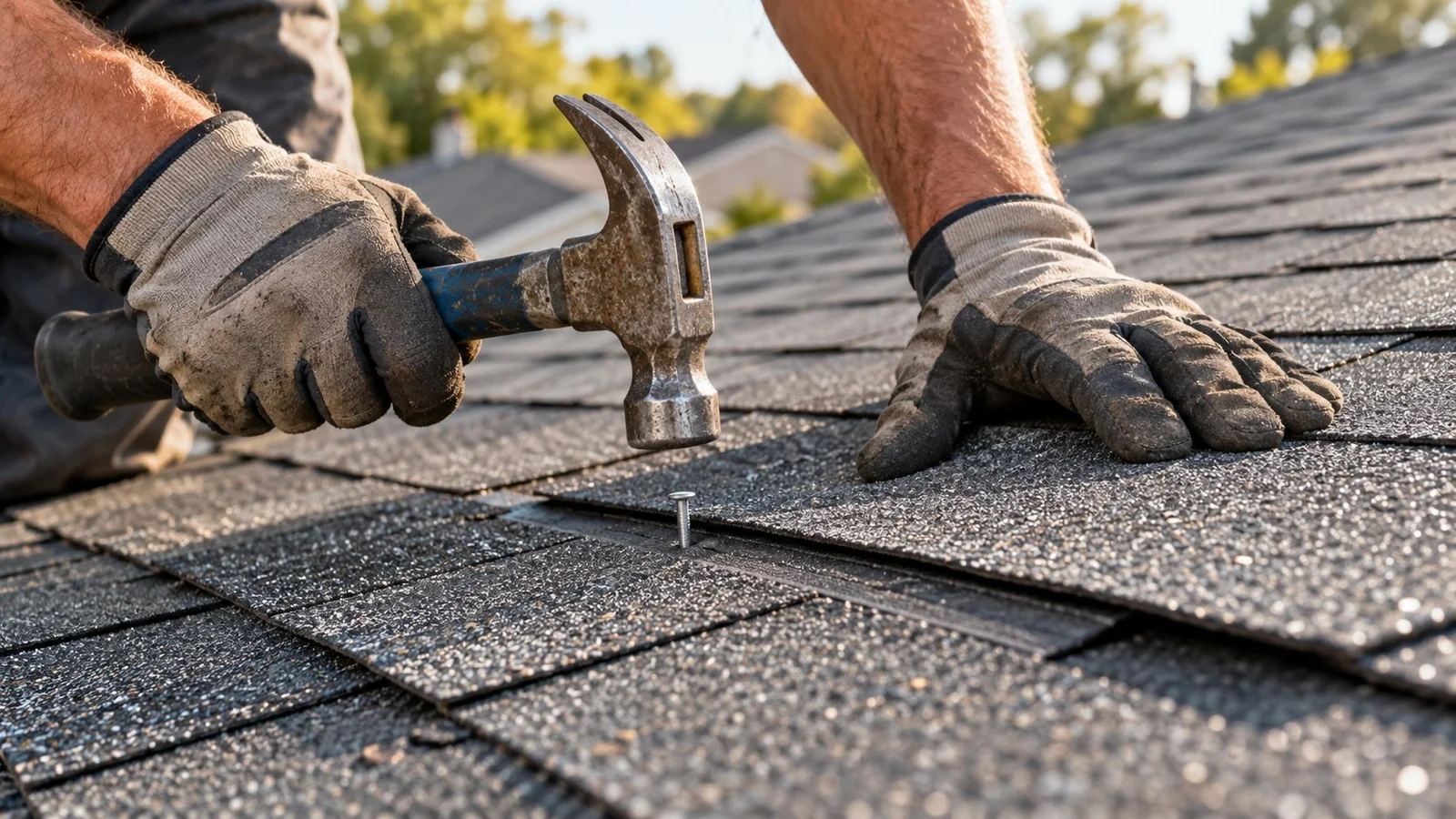
The U.S. Department of Energy says a reflective roof could stay more than 50°F cooler than a conventional roof under the same sunny conditions. DOE also says cool roofs achieve the greatest cooling savings in hot climates.
Leander averages about 93 days a year above 90°F, so that’s us.
DOE adds that in colder places, the winter heating penalty can outweigh the summer savings. In Central Texas, cooling is the bigger concern most of the year.
Shingle temperature and roof life
Heat is one of the things that ages asphalt shingles. Sun dries out the asphalt, the shingles turn brittle and granules loosen. Architectural shingles often last about 15 to 25 years in Central Texas, depending on hail, ventilation and installation.
Roof color is one factor in that heat load, but ventilation matters as much. A light roof over a poorly vented attic can still cook shingles from below. Our guide to attic ventilation in Texas explains the intake and exhaust balance.
Cool Roof Shingles: What “Cool” Actually Means
A cool roof reflects more sunlight and sheds absorbed heat well. Two measurements describe it:
- Solar reflectance: how much sunlight the surface reflects instead of absorbing.
- Thermal emittance: DOE describes it as the ability to shed heat by giving off thermal infrared radiation.
For asphalt shingles, DOE’s advice is to choose shingles surfaced with light-colored granules or, if you prefer a darker look, cool-colored granules. That means cool roof shingles don’t have to be white. Some darker shingles use cool-colored granules designed to reflect more sunlight than standard granules.
Where to check a shingle’s rating
The Cool Roof Rating Council runs a rating program that lists solar reflectance and thermal emittance for roofing products. Products are tested when new, then weathered outdoors for three years and tested again. CRRC notes that a listing alone doesn’t mean a product is “cool” under any particular code.
You may also see older marketing that mentions ENERGY STAR roofs. The CRRC reports that the ENERGY STAR roof products program ended on June 1, 2022, so use the CRRC directory or the manufacturer’s published ratings instead.
Best Roof Color for Texas Heat
If heat is your main concern, the best roof color for Texas heat is the lightest one you like that your HOA allows, or a darker shingle with a published cool rating. Here’s how the choices compare:
| Roof color choice | Heat | Looks and HOA notes |
|---|---|---|
| White or very light gray | Least heat absorbed | Fewer shingle options; check HOA list |
| Light gray, tan, light brown | Less heat than dark shades | Often pairs well with limestone |
| Mid-tone gray or weathered wood | Middle of the range | Most flexible match for brick and stone |
| Dark brown, charcoal, black | Most heat absorbed | Check for a cool-rated version |
| Dark shingle with cool granules | Less heat than a standard dark shingle | Check the shingle’s published ratings |
Metal roofs come in factory-applied finishes, so ask for the reflectance rating of the exact color you’re considering. If you’re weighing metal, see our metal roofing page.
HOA Rules and Roof Color in Leander
Most master-planned communities in Leander, including Crystal Falls, Bryson, Travisso and Mason Hills, require HOA architectural approval for a change in shingle color or material. Like-for-like replacements often don’t need approval, but check your HOA rules before you order.
Ask whether your HOA keeps an approved list of shingle lines and roof color options. If your preferred cool shingle isn’t on it, ask whether you can submit it for review with the manufacturer’s color sample and product sheet. Our guide to HOA roof approval in Leander covers what to submit and when.
Homes outside an HOA have more freedom. The City of Leander lists re-roofing among exterior work that doesn’t need a building permit, but it asks owners to confirm with its Permits & Building Inspections Department before work starts, HOA or not.
What Color Roof Increases Home Value?
We haven’t seen a reliable, published study that shows one roof color adds a set amount of value to a Leander home, so we won’t quote one. What we can say is practical. Buyers notice a roof that clashes with the house, looks patchy or looks old, and an inspector will note a worn roof regardless of color.
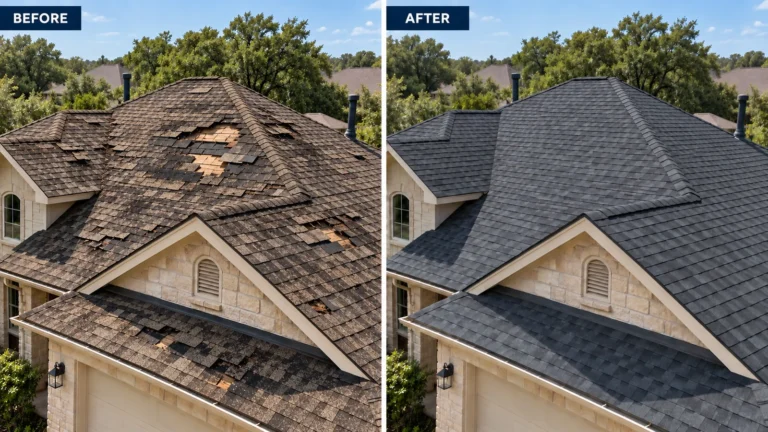
The roof color that helps most at resale is usually one that matches the home’s brick, stone and trim, fits the neighborhood, and is in good condition. On a street where most roofs are mid-tone grays and browns, a sharply different color can stand out for the wrong reasons.
If you’re replacing a roof partly for resale, a clean installation with documentation does more than any color trend. Keep the permit, the shingle product name and color, and dated photos together for the buyer.
Matching Roof Color to Brick, Stone and Siding
The roof covers a big share of what people see from the street. Here are simple rules for matching:
- Start with what you can’t change. Brick and stone stay; pick a roof color that works with their undertones.
- Warm with warm, cool with cool. Tan, cream and buff limestone usually suit warm browns and weathered wood. Gray stone and white brick usually suit grays and charcoal.
- Avoid matching too exactly. A roof a shade darker or lighter than the masonry reads better than one that blends into it.
- Look at full-size samples outdoors. Small chips look darker indoors. Hold a full shingle against the house in morning and afternoon light.
- Drive the neighborhood. See the shingle on real roofs in Deerbrooke, Mason Hills or along Crystal Falls Pkwy before you decide.
- Check the HOA list early. Pick two or three roof color options in case your first choice isn’t approved.
- Ask for the cool rating. If two colors look equally good, choose the one with the better published reflectance.
Patch Repairs and Color Matching
Color matters for repairs too. Shingle colors get discontinued, and a 10- or 15-year-old roof may not have an exact match anymore. A close match on a back slope can be fine, while a patch on the front can stand out.
That’s one reason some homeowners replace a full slope or the whole roof instead of patching. The Texas Department of Insurance notes that an insurer might not pay to replace the entire roof just because new shingles don’t match perfectly, so check your policy.
Questions to Ask Before You Order Shingles
Whether you live in Savanna Ranch, near the Northline district or off Hero Way in ZIP 78641, the same short list applies before any roof color is locked in:
- What is the exact product line and color name on the estimate?
- Does the shingle have published solar reflectance and thermal emittance ratings?
- Is that roof color on my HOA’s approved list, or do I need to submit it?
- Will the new color look right next to neighboring roofs and my masonry?
- Is attic ventilation being checked as part of the job?
- Will you confirm with the City of Leander before work starts?
Get the answers in writing on the estimate. If a roof color or product changes after HOA approval, you may need to resubmit, so confirm the final choice before the order goes in. For what a full re-roof includes, see our roof replacement page.
Roof Color Questions
What is the best roof color for Texas heat?
Lighter colors absorb less sun and run cooler than dark ones. DOE says a reflective roof can stay more than 50°F cooler than a conventional roof. If you prefer a darker look, choose a shingle with cool-colored granules and a published solar reflectance rating.
Do cool roof shingles have to be white?
No. DOE says asphalt shingles can be surfaced with light-colored granules or, for a darker look, cool-colored granules. Check the product’s ratings in the Cool Roof Rating Council directory or the manufacturer’s data sheet.
Does a dark roof make my house hotter?
A dark roof absorbs more sunlight and gets hotter, and some of that heat reaches the attic. How much it affects your rooms depends on attic ventilation, insulation and whether you have a radiant barrier. Ventilation matters as much as roof color for shingle life.
What color roof increases home value?
We don’t know of a reliable study that ties one roof color to a set increase in value. A roof color that suits the brick, stone and neighborhood, on a roof in good condition, tends to help most. Keep permit and product records for buyers.
Do I need HOA approval to change my roof color in Leander?
Usually, if you live in a master-planned community. Crystal Falls, Bryson, Travisso and Mason Hills generally require architectural approval for a change in shingle color or material. Check your HOA’s rules before ordering shingles.
Talk to a Leander Roofer
Call Leander Roof Repair at (512) 254-8474. We’ll look at your brick, stone and HOA requirements with you and give you a written estimate. For timing, see our post on the best time to replace a roof.