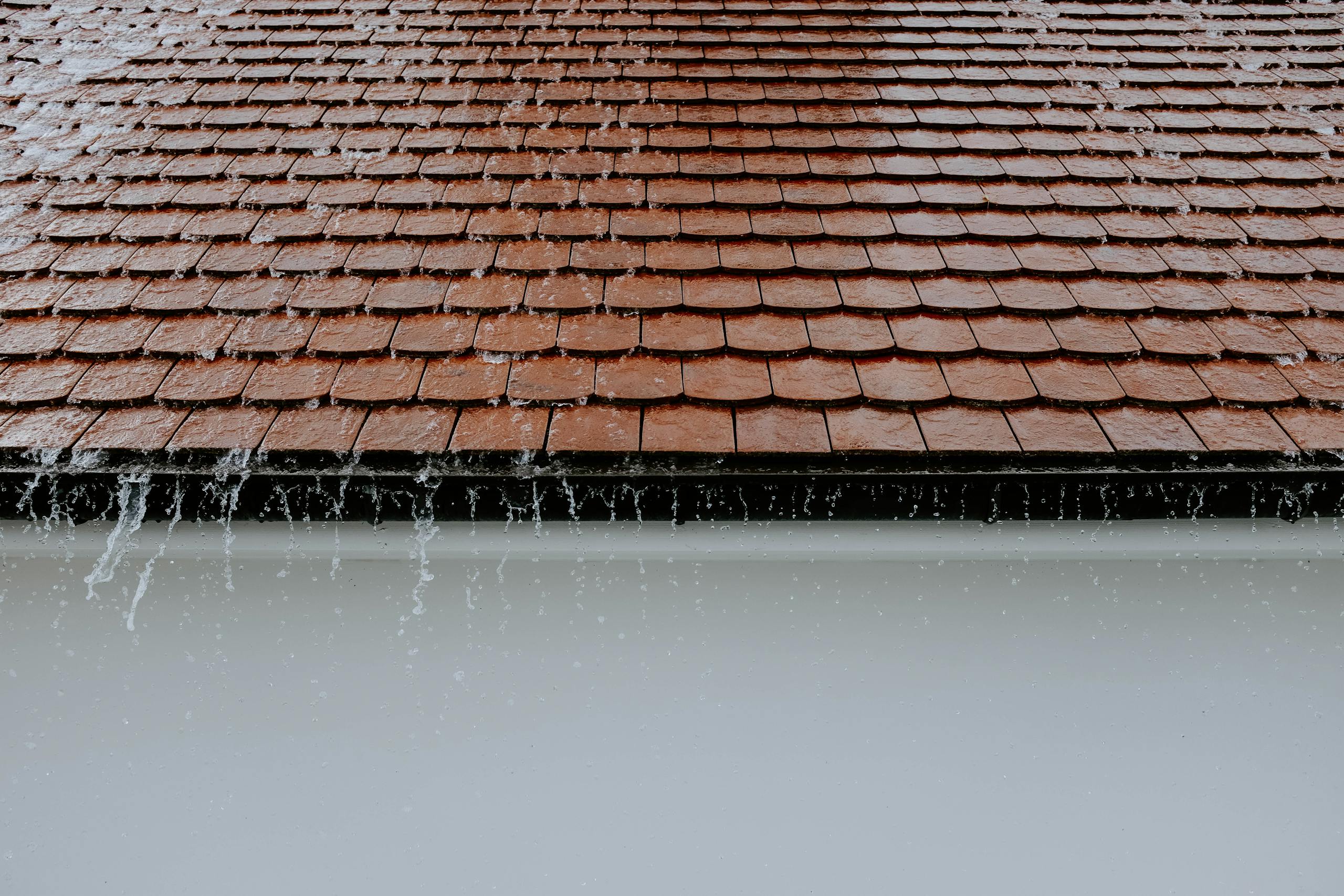
Flat roofs & TPO · Leander, TX 78641
Flat Roof Repair in Leander, TX
Flat roof repair in Leander usually comes down to four things: open seams, ponding water, flashing at walls and curbs, and punctures. We repair TPO, modified bitumen, EPDM and built-up roofs on businesses and on home patio covers and porches, with dated photos of every problem and a written estimate before work starts.
Updated October 2026 · Leander Roof Repair, Leander, TX
What Flat Roof Repair Involves
Flat roof repair means finding where water gets through a low-slope membrane and sealing it with materials that bond to that membrane. Most problems sit at seams, edges, curbs, drains and punctures. A good repair matches the system already on the roof.
“Flat” roofs aren’t truly flat. They have a low slope so water can reach drains, scuppers or gutters. When the slope is too shallow or a drain clogs, water sits and the roof wears faster.
We work on flat and low-slope roofs across Leander, from shops in Old Town Leander to newer buildings in the Northline district, and out to Cedar Park and Liberty Hill. Our service area page lists where we go.
Which Flat Roof System Do You Have?
Most low-slope roofs use one of four systems. Knowing which one you have matters, because flat roof repair materials have to match. A TPO patch won’t bond to EPDM, and some asphalt-based patches can damage single-ply membranes.
| System | What it looks like | Seams | Common problems |
|---|---|---|---|
| TPO | White or light gray single-ply sheet | Heat-welded | Seam failures, punctures, flashing pulled from walls and curbs |
| Modified bitumen | Granule-surfaced rolls, dark or white | Torched, mopped or self-adhered laps | Open laps, blisters, cracked surface, worn granules |
| EPDM | Black rubber sheet | Taped or glued | Seam tape letting go, shrinkage pulling at edges |
| Built-up roofing | Layers of felt and asphalt, often with gravel | Built in layers | Blisters, splits, bare spots where gravel has moved |
TPO roofing in Central Texas heat
TPO roofing is common on newer retail and office buildings along US-183 and the 183A Toll because the white surface reflects sun. The U.S. Department of Energy says a cool roof “is designed to reflect more sunlight than a conventional roof, absorbing less solar energy” (DOE on cool roofs).
TPO seams are welded with hot air, so a good seam holds as well as the sheet. A poor weld can look fine and still leak.
When we do TPO flat roof repair, we clean the old membrane, probe the seams and weld new material in place. Weathered TPO roofing may need extra prep before a patch will bond.
Modified bitumen
Modified bitumen is common on smaller commercial buildings and on residential low-slope sections like porches. It handles foot traffic well. With age, laps open, the surface cracks and blisters form where air or moisture got trapped.
EPDM
EPDM rubber shows up on older buildings and some additions. It stays flexible, but seam tape and adhesives let go over time. Older EPDM can shrink and pull at edges and corners.
Built-up roofing
Built-up roofs with gravel are found on older commercial buildings. They are repaired in layers, which means clearing gravel, rebuilding plies and resetting the surface.
Ponding Water: Why It Matters for Flat Roof Repair
The Asphalt Roofing Manufacturers Association defines ponding as water that stays on a roof 48 hours or longer. ARMA warns it can add load to the deck and lead to “accelerated erosion and deterioration of the membrane surface” (ARMA on ponding water).
Small puddles that dry within a day or two are normal on many low-slope roofs. Large ponds that sit for days are not. They also collect dirt and leaves, which hold even more water and clog drains.
Fixing ponding during flat roof repair
- Clear drains, scuppers and gutters, and check strainers and clamping rings.
- Repair the membrane in the ponding area, since it wears out first.
- Add a drain or scupper where water has nowhere to go.
- During a larger repair or re-roof, add tapered insulation or crickets to move water toward drains.
Seams, Flashing and Punctures
Seams and flashing are where most low-slope leaks start. Flashing at parapets, rooftop unit curbs and roof-to-wall joints moves with heat and gets walked on by service crews. Pipe boots and pitch pockets dry out and crack.
What we check on every flat roof repair
- Every seam we can reach, probed for open laps or weak welds.
- Flashing at parapets, curbs and walls, including the top termination.
- Drains, scuppers and gutters.
- Pipe boots, pitch pockets and conduit supports.
- Soft spots underfoot that point to wet insulation or a damaged deck.
- Service paths from the roof hatch to rooftop units, where dropped screws puncture the membrane.
That list keeps flat roof repair from turning into one patch that misses the next leak. Wherever the membrane meets a wall, we use metal flashing and proper terminations, not caulk. For flashing on the sloped parts of a building, see roof flashing repair.
How Heat and Hail Hit Flat Roofs in Leander
Leander averages about 93 days a year above 90°F. A flat roof takes that sun all day, which dries sealants, stiffens older membranes and works seams loose.
Hail is the other big stress. Texas has led the US in major hail events for 11 straight years, according to the NICB. On May 16, 2025, hail up to 3 inches fell in north and central Leander, with 2.75-inch stones measured in Deerbrooke.
A flat roof takes hail straight on, with no slope to soften the hit. On TPO and EPDM, hail can fracture the membrane or crush the insulation board under it. On modified bitumen, it knocks granules loose and cracks the surface.
We check the membrane, soft metals like vents and coping, and rooftop units, and photograph each area with the date. See signs of hail damage for what to look for from the ground.
If you file a claim, it’s yours. Texas law bars a roofer from adjusting or negotiating your claim (Insurance Code 4102.163) and from waiving or paying your deductible (Business and Commerce Code 27.02). We provide dated photos and a written estimate, and we can meet your adjuster on site if you ask.
Coatings vs Re-Roof: Which Makes Sense?
A coating can extend the life of some flat roofs, but it is not a fix for a wet roof. A coating over wet insulation traps moisture and hides the problem. Before any coating, the roof has to be dry, sound and fully repaired.
| Situation | Usual direction |
|---|---|
| A few leaks at seams or flashing, dry insulation | Flat roof repair |
| Sound membrane, weathered surface, dry insulation | A coating may be an option |
| Wet insulation in several areas | Remove wet sections, or plan a re-roof |
| Leaks keep appearing in new places | Re-roof planning |
| Deck sagging or soft | Structural repair and re-roof |
We explain which way we’d go and why, in writing. Our commercial roofing page covers coatings and replacement for business buildings.
Residential Flat Roofs: Patio Covers, Porches and Carports
Many Leander homes have a low-slope section even when the main roof is shingled. In neighborhoods like Crystal Falls and Travisso, common spots are back patio covers, porches, carports and the low area where two roof sections meet.
Shingles aren’t made for very low slopes, so these areas often use modified bitumen or another membrane. They leak more often than their size suggests. They collect live oak leaves, tie into the house wall and often have barely enough slope to drain.
Flat roof repair on a patio cover usually means fixing the wall flashing, the membrane and the edge where it drains. If the patio cover was added later, we also check how it ties into the original roof, because that joint is a common leak point.
Flat Roof Repair in Austin’s Northern Suburbs
If you searched for flat roof repair Austin roofers offer, know where we work. Our base is Leander, ZIP 78641, a city that spans both Williamson and Travis counties. We focus on Leander, Cedar Park and Liberty Hill, the north end of the Austin metro.
For commercial buildings with active leaks, see commercial roof repair.
How We Handle Flat Roof Repair
- You call of the leak inside and the roof if you can safely see it.
- We inspect the roof and, when needed, the ceiling below, and take dated photos of every problem.
- You get a written estimate before any work, with no same-day deadline.
- We make the repair with materials that match your membrane, and metal flashing where flashing belongs.
- We clean up with a magnet sweep for nails and screws, and send before-and-after photos.
Flat Roof Repair FAQs
How long should water sit on a flat roof?
Water should drain within about 48 hours of rain. ARMA calls water that stays longer “ponding,” and it wears the membrane faster. Clogged drains are a common cause and often a simple fix.
Can you patch a TPO roof?
Yes. TPO can be patched by cleaning the membrane and heat-welding new TPO over the damaged area. Older, weathered TPO may need more prep for the patch to bond.
Is a roof coating the same as flat roof repair?
No. A coating covers the surface but doesn’t fix wet insulation, open seams or failed flashing. Repairs come first, and a coating only makes sense on a dry, sound roof.
Does a patio cover need a different roof than the house?
Often, yes. Patio covers and porches usually have a lower slope than the main roof, and shingles aren’t made for very low slopes. A membrane like modified bitumen is common there.
Can hail damage a flat roof even if I can’t see it?
Yes. Hail can fracture a membrane or crush the insulation underneath without an obvious mark from the ground. Dented vents and coping are good clues, and an inspection with dated photos settles it.
Got a Leak on a Flat Roof?
Call Leander Roof Repair at (512) 254-8474 with photos of the leak and the roof. We’ll find the source and put the flat roof repair in writing before any work starts.