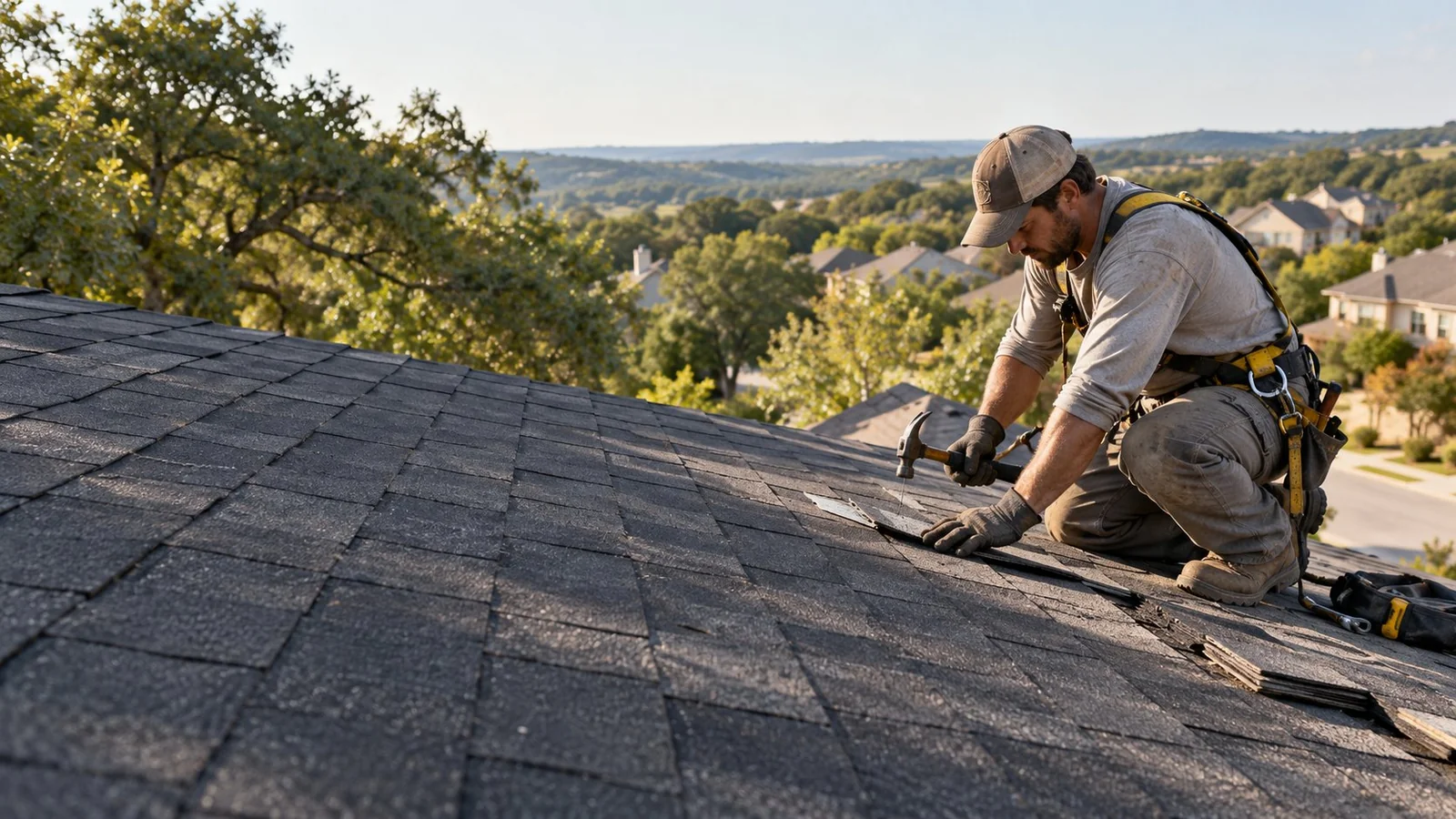
Metal roofing · Leander, TX
Metal Roofing and Metal Roof Repair in Leander, TX
Metal roofs in Leander usually leak at loose screws, worn rubber washers, open seams and flashing that has pulled away after years of heat cycling. Leander Roof Repair fixes those problems on homes, barns and shops, and installs standing seam and exposed-fastener (R-panel) metal roofs. Every job gets a written estimate first.
Updated October 2026 · Leander Roof Repair, Leander, TX
Metal Roof Repair: What Usually Goes Wrong
Loose or backed-out fasteners
Exposed-fastener roofs (R-panel and corrugated) are held down with screws through the panel. Every day the metal heats up, expands, cools and contracts. In Leander, with about 93 days a year above 90°F, that movement slowly works screws loose and wallows out the holes. Water then follows the screw into the decking or the building.
Worn rubber washers
Each screw has a rubber or neoprene washer that seals the hole. After about 10 to 20 years of Texas sun, many washers crack and shrink. The screw may still be tight, but the seal is gone.
Open seams and laps
Where panels overlap, sealant tape and fasteners keep water out. When fasteners loosen or the sealant dries out, wind-driven rain pushes water through the lap.
Flashing and trim
Ridge caps, rake trim, wall flashing and pipe penetrations are common leak spots, especially where a contractor relied on caulk instead of a proper flashing boot or closure strip.
Rust and scratches
Cut edges, scratches and places where dissimilar metals touch can rust. Small spots can be cleaned and sealed. Rust holes need a patch or a panel replacement.
Hail dents
Large hail can dent metal panels. Many dents are cosmetic and don’t cause leaks, but hail that crushes seams or breaks fasteners can. On May 16, 2025, hail up to 3 inches fell in north and central Leander, large enough to dent many metal roofs.
How We Repair Metal Roofs
- Inspect fasteners, seams, flashing, trim and penetrations, and photograph problems with the date.
- Re-fasten with new, slightly larger screws and fresh washers where holes have wallowed out.
- Re-seal laps and seams with the right butyl tape or sealant for that panel profile.
- Replace failed flashing, pipe boots and closure strips.
- Treat or replace rusted sections, and replace panels that are holed, badly bent or crushed.
- Clean up every cut-off and screw, and send you before-and-after photos.
Many 15- to 25-year-old exposed-fastener roofs don’t need replacing. A full re-screw with new washers, plus new flashing, can add years of life for far less than a new roof.
Standing Seam vs Exposed Fastener (R-Panel)
| Standing seam | Exposed fastener (R-panel, corrugated) | |
|---|---|---|
| How it’s fastened | Hidden clips under raised seams | Screws through the face of the panel |
| Where it’s used in Leander | Homes, modern farmhouse styles | Barns, shops, carports, ranch homes, outbuildings |
| Upkeep | Very low; no exposed screws to wear out | Screws and washers need checking and eventually replacing |
| Movement | Panels can expand and contract on the clips | Movement works screws loose over time |
| Cost | Higher | Lower |
Metal Roofs, Hail and Insurance
Metal resists hail cracking better than shingles, but it can still dent. Two things to check with your agent:
- Impact-resistant discounts. Some metal roofing products are rated Class 4 under UL 2218. According to the Texas Department of Insurance, each insurer sets its own discount for impact-resistant roofs and the paperwork it accepts. The installer must complete TDI form PC068 after installation.
- Cosmetic damage exclusions. Many Texas policies exclude hail dents that don’t affect how a metal roof sheds water. Read your policy before choosing metal, and before filing a claim for dents.
Metal Roofing Around Leander
West and north of town, toward Liberty Hill and the larger lots off Bagdad Rd, more homes, barns and shops have metal roofs. In master-planned communities like Crystal Falls, Bryson and Travisso, metal is less common and usually needs HOA architectural approval before installation. We provide the product specs and color samples your HOA asks for.
Metal Roofing FAQs
How long does a metal roof last in Texas?
Well-installed metal roofs commonly last 40 years or more. Exposed-fastener roofs need their screws and washers checked and eventually replaced along the way. Standing seam needs less upkeep.
Why is my metal roof leaking around the screws?
Usually because the rubber washer has cracked or the screw has backed out from heat movement. Replacing the screws with new, properly sized fasteners and washers usually fixes it.
Is a metal roof louder in rain or hail?
Over solid decking and an attic, most people find a metal roof about as quiet as shingles. On open barns and carports without decking, rain and hail are louder.
Can you put a metal roof over shingles?
Sometimes, with the right underlayment or purlins and if code and the manufacturer allow it. We usually recommend a tear-off on homes so we can check the decking first.
Do metal roofs make a house hotter?
No. Metal reflects much of the sun’s heat, especially lighter colors and coated panels, which can help keep an attic cooler than dark asphalt shingles.
Metal Roof Leaking or Rusting?
Call Leander Roof Repair at (512) 254-8474. We’ll tell you whether a re-screw and new flashing will do or whether panels need replacing.