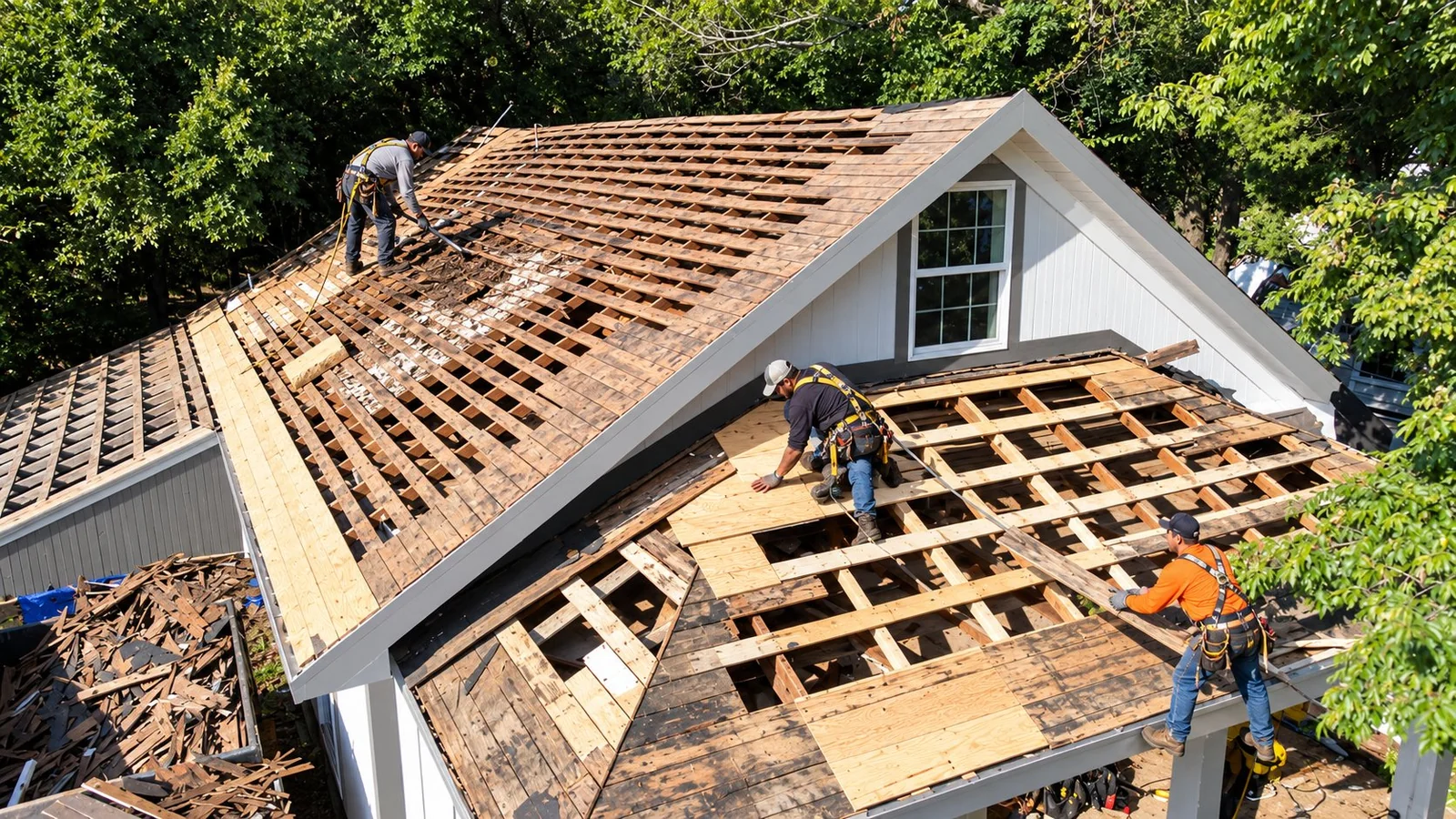
Emergency roof repair & tarping · Leander, TX
Emergency Roof Repair in Leander, TX
When a storm tears off shingles or a limb comes through the roof, the first job is to stop more water from getting in. Leander Roof Repair tarps or temporarily seals the damaged area, documents it with dated photos and then plans the permanent repair. You get the tarp estimate before we climb.
Updated October 2026 · Leander Roof Repair, Leander, TX
What Counts as a Roofing Emergency
Call right away if:
- Water is actively coming through a ceiling, light fixture or wall
- A tree or large limb has hit the roof
- Wind has torn off shingles and exposed the underlayment or the wood decking
- Hail has punched holes in skylights, vents or the roof itself
- You can see daylight through the roof decking from the attic
A few missing shingles with dry underlayment beneath, or a small stain that isn’t growing, can usually wait for a scheduled repair. If you’re not sure, call and we’ll tell you honestly.
What to Do in the First Hour
- Get people and pets away from sagging ceilings and wet electrical fixtures.
- Shut off power to any circuit where water is near lights, fans or outlets.
- Catch the water with buckets and towels, and move furniture and electronics.
- Photograph everything inside and out, before anything is moved or cleaned up. Note the date and time of the storm.
- Stay off the roof. Wet, storm-damaged roofs are dangerous, and a downed limb can still shift.
- Call us at (512) 254-8474 with photos.
- Call your insurance company or agent if the damage looks larger than your deductible. Most policies expect you to take reasonable steps to prevent further damage, and a tarp is one of them.
How Emergency Tarping Works
A proper tarp covers the damaged area with room to spare and runs up and over the ridge, so water can’t run underneath it from above. It’s held down with wood battens screwed through the tarp into the decking, not with bricks or loose nails that tear out in the next gust.
Before we tarp, we:
- Check that the area is safe to walk and that limbs are clear
- Photograph the damage with the date
- Give you the tarp estimate, in writing, before we start
After we tarp, we photograph the tarp in place, check the attic for wet insulation and decking, and plan the permanent repair.
How Long a Tarp Lasts
A tarp is a stopgap, not a repair. Most last only about 90 days, and Texas sun and wind break them down faster. Plan the permanent fix within a few weeks, especially in hail season (March through June), when another storm can lift a tarp that has started to fray.
Common Emergencies in Leander
Hail storms
Hail season in Leander runs March through June. StormerSite has logged 105 hail reports within 10 miles of Leander since 2004, and 73 of them fell in April or May. On May 16, 2025, hail up to 3 inches fell in north and central Leander, including 2.75-inch stones in Deerbrooke. Large hail can crack skylights, punch through vents and split shingles. See hail damage roof repair.
Wind and squall lines
Spring squall lines and microbursts lift and tear shingles, especially on ridges and rakes. Once a shingle’s seal breaks, the next gust can peel off the shingles around it.
Fallen limbs
Mature live oaks in Crystal Falls, Old Town Leander and older parts of town drop limbs onto roofs in wind, and ice brings down more. The February 2023 ice storm brought down limbs across the Austin area.
Active leaks after heavy rain
Sometimes the first sign of a problem is water in the ceiling during a downpour. If it’s still coming in, we tarp first and trace the source when the roof is dry. See roof leak repair.
After the Emergency: The Permanent Repair
Once the roof is dry and safe, we inspect the damaged area and the rest of the roof. You get a written estimate for the permanent repair or, if the damage is widespread, for a roof replacement. If you’re filing a claim, the claim stays yours. Texas law bars a roofer from adjusting your claim or covering your deductible, but we can give you dated photos and meet your adjuster on site if you ask.
Emergency Roof Repair FAQs
Will insurance pay for emergency tarping?
Many homeowners policies treat a tarp as a reasonable step to prevent further damage after a covered storm, so it’s often included in a covered claim. Check your policy or ask your agent, and keep the receipt and photos.
Can I tarp my own roof?
Some homeowners do, but wet, storm-damaged roofs are where most falls happen. If you do it yourself, stay off steep or two-story roofs, and run the tarp over the ridge so water can’t get under it.
Should I call my insurance company or a roofer first?
When water is coming in, stop the water first. Then call your insurer or agent to report the damage if it looks larger than your deductible. Photos taken before the tarp goes on help with either step.
How long can I leave a tarp on my roof?
Treat 90 days as the upper limit, and less in summer sun. A tarp that’s been up for months can let water in at fastener holes and frayed edges.
Water Coming In? Call Now
Call Leander Roof Repair at (512) 254-8474. You’ll get the tarp estimate before anyone climbs.